Parking Lot Line Striping in Kansas City — Paint, Thermoplastic, and ADA
Professional line striping that keeps traffic flowing and meets every compliance requirement.
Get your free Line Striping & Marking estimate
Tell us about your property and we'll take a look — you'll hear back within 24 hours, or call (913) 701-6044 now.
- Free estimate, no obligation
- Response within 24 hours
- 1-year warranty on all work
- Owner-led — no subcontractors
Thermoplastic vs Paint Striping
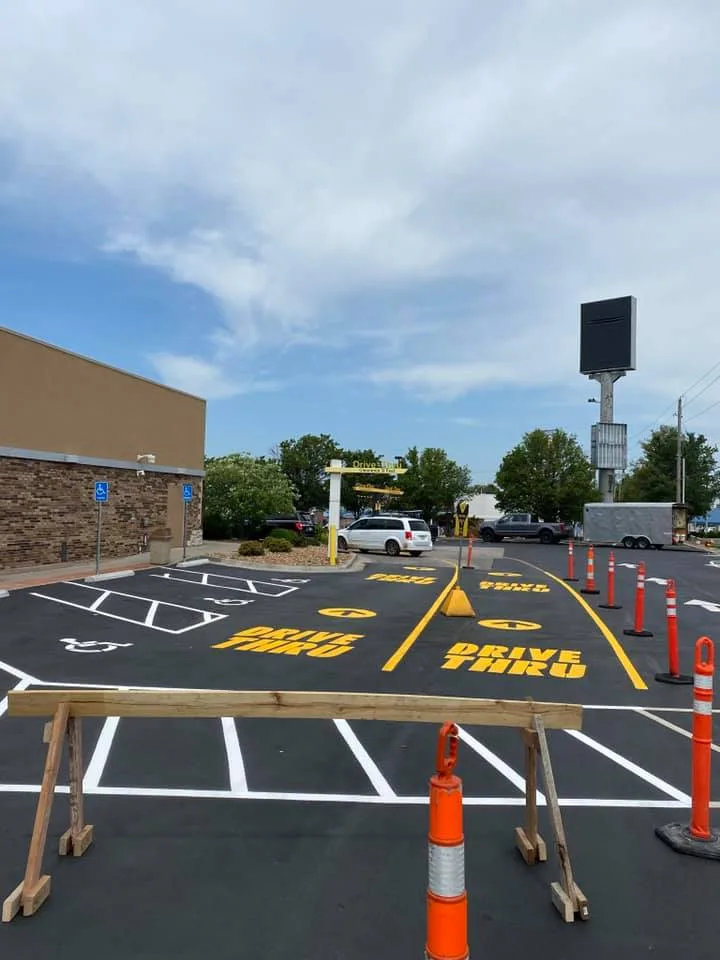
Thermoplastic striping melts into the asphalt at 400°F, creating a bond that lasts 5-8 years versus 1-2 years for waterborne paint. The plastic material contains reflective glass beads mixed throughout, maintaining visibility even as the surface wears. Paint sits on top of the pavement, making it vulnerable to Kansas City's 100+ freeze-thaw cycles each winter. Most high-traffic commercial lots benefit from thermoplastic on main drive lanes and crosswalks, while paint works fine for individual parking stalls. The upfront cost for thermoplastic runs about triple that of paint, but you're restriping every 6-7 years instead of annually. For distribution centers running 24/7 truck traffic or retail properties where appearance matters year-round, thermoplastic delivers better ROI. Paint application requires 50°F minimum temperature and dry conditions, while thermoplastic can be applied down to 35°F - extending the striping season here from late March through November.
How Long Parking Lot Striping Takes to Dry
Waterborne paint dries to touch in 5-10 minutes under ideal conditions - 70°F, low humidity, no wind. Full cure takes 30-45 minutes before reopening to traffic. Morning applications when pavement temperatures are cooler can double these times. Thermoplastic sets almost instantly once applied, cooling from 400°F to solid in under 30 seconds. No dry time needed - traffic can roll immediately. Jackson County's heavy clay soils create morning dew that lingers until 10 AM during spring and fall, pushing paint projects later in the day. We track surface moisture with infrared thermometers because even invisible dampness prevents proper paint adhesion. For 24-hour operations like hospitals or manufacturing facilities, thermoplastic's zero-downtime application often justifies the higher material cost. Quick-dry additives can reduce paint cure time to 15 minutes, but they compromise longevity and aren't recommended for high-traffic areas.
What ADA Requirements Apply to Commercial Parking Lots
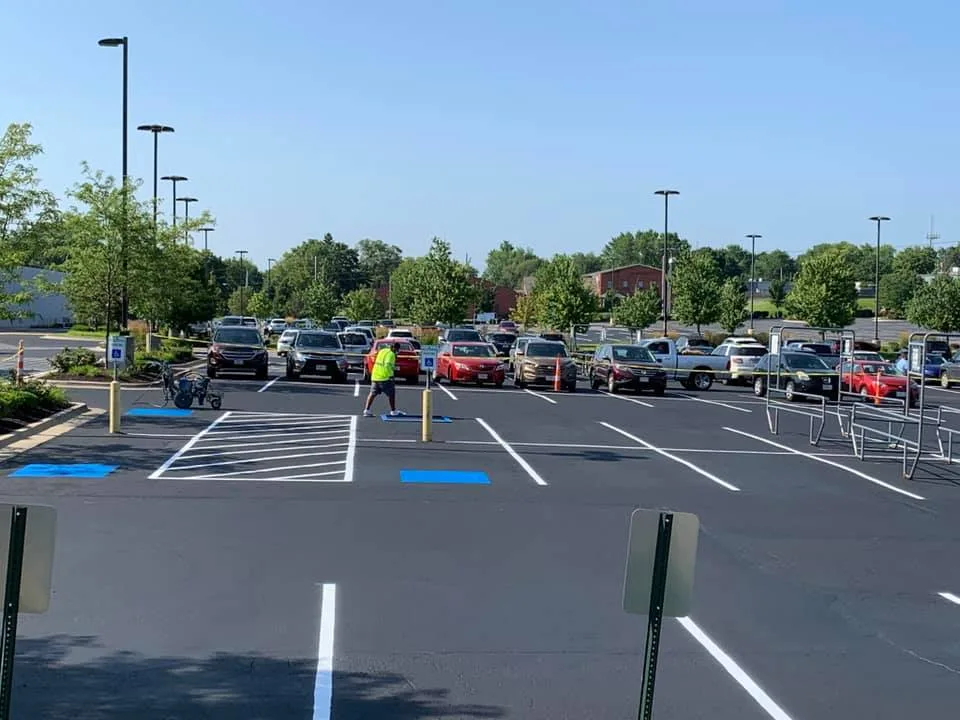
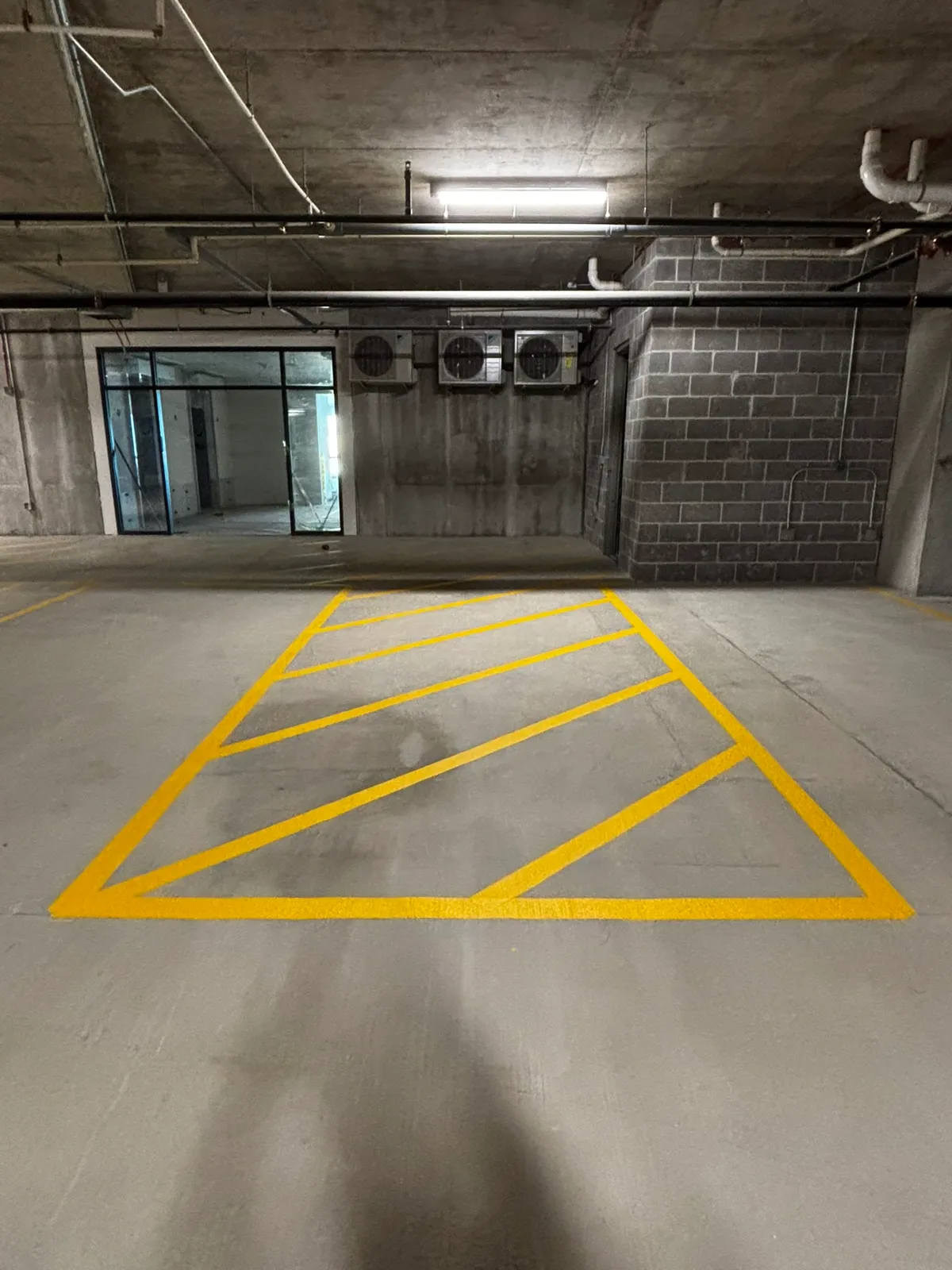
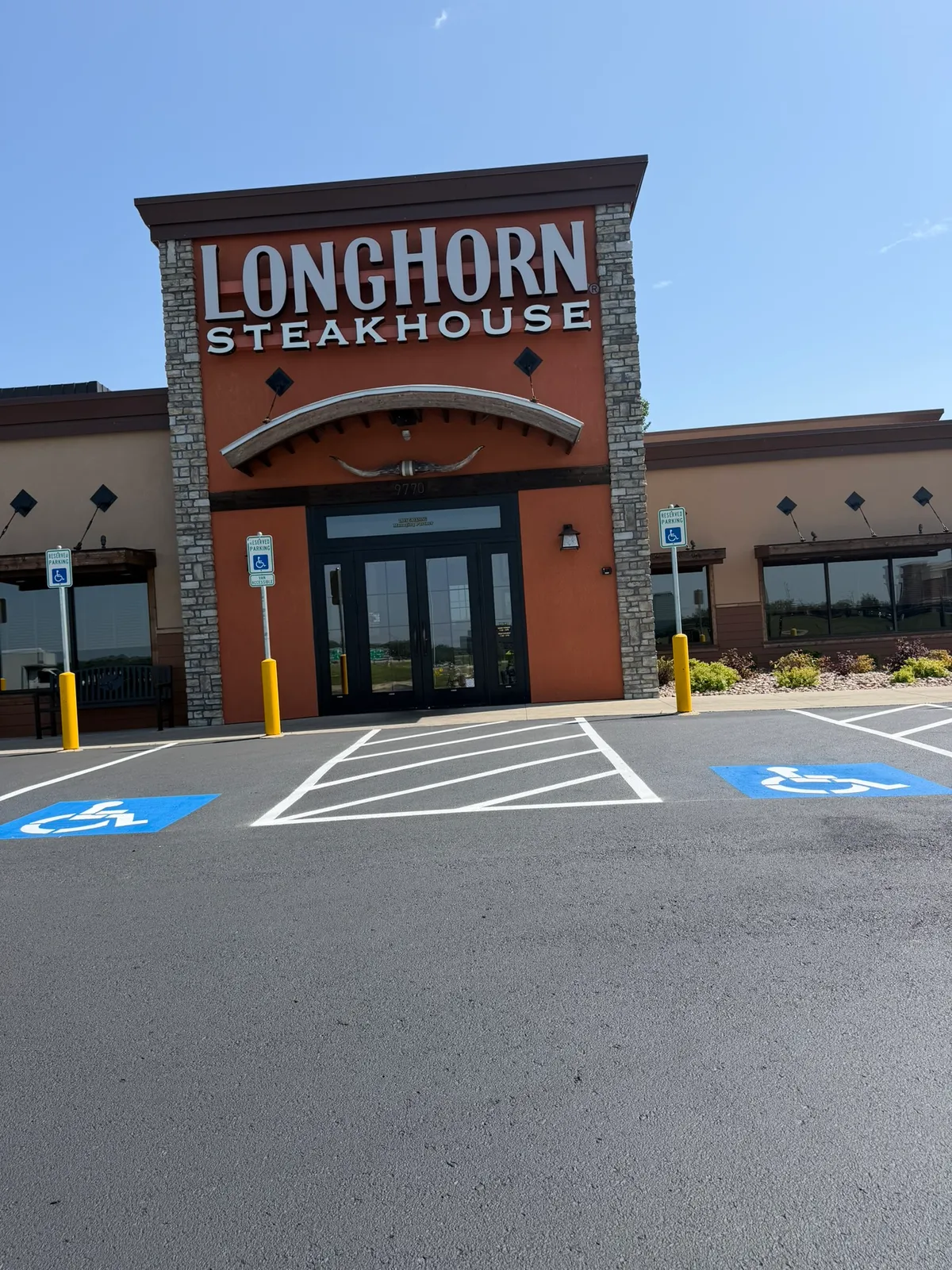
Every 25 parking spaces requires one accessible stall, and for complete ADA compliance those spaces must be connected to building entrances by accessible routes., with one in eight being ADA van-accessible (minimum 11 feet wide with 5-foot access aisle). Standard accessible spaces need 8-foot width plus 5-foot access aisle. The 2010 ADA Standards mandate specific signage placement, slope requirements (maximum 2% in any direction), and surface conditions. Access aisles must connect directly to accessible routes without requiring users to travel behind parked vehicles. Diagonal striping in access aisles uses 4-inch lines spaced 3 feet apart at 45-degree angles. MUTCD compliance requires specific blue color (Federal Color #15090) for markings. Medical facilities, senior housing, and retail centers often exceed minimum requirements based on actual usage patterns. Non-compliance fines start at $75,000 for first offenses. Our crew carries digital levels to verify slopes and uses steel stencil templates cut to exact ADA dimensions. Joe personally verifies every accessible space meets current federal standards during his final inspection.
Commercial Properties That Need Regular Restriping
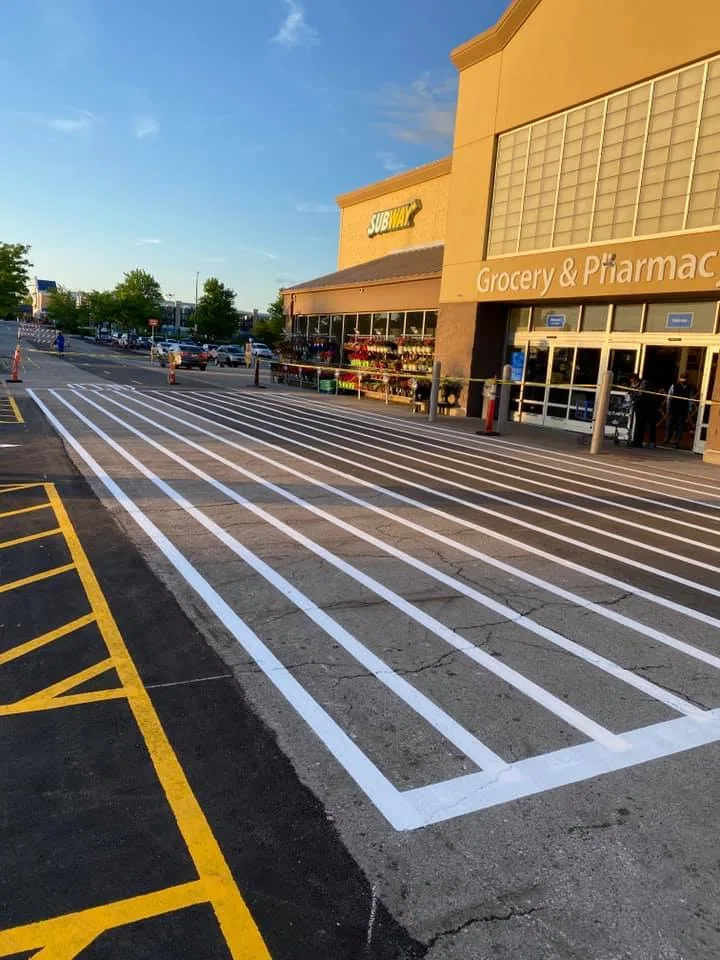
Distribution centers with constant semi traffic wear through standard paint in 6-8 months, especially at dock approaches and turning radiuses. Retail shopping centers need annual touch-ups on high-visibility areas like fire lane marking and crosswalks, plus full restriping every 2-3 years to maintain curb appeal. Medical facilities require pristine patient drop-off zones and clearly marked emergency vehicle lanes - faded markings create liability. Manufacturing plants with shift changes need visible stall lines to prevent parking chaos when 200+ employees arrive simultaneously. Property management companies maintaining multiple sites often schedule rolling restriping programs, hitting 2-3 properties per year to spread budget impact. Schools and churches see heavy weekend use from community events, accelerating wear patterns beyond typical commercial properties. Hotels near KCI Airport compete on first impressions - fresh striping signals attention to maintenance.
Need Line Striping & Marking for Your Property?
Get a free estimate from the crew that has completed 4,000+ projects across the KC metro. No pressure, no obligation.
Layout, Mask, Spray: Parking Lot Striping From Start to Finish
What happens after you call your Kansas City paving contractor — from first inspection to final walkthrough.
We inspect your lot, identify every issue, and provide a detailed estimate — no cost, no pressure.
We design the scope of work around your business hours so your operations aren't disrupted.
Old asphalt is milled down, debris cleared, and the base is prepared for a clean bond.
Fresh hot-mix asphalt is laid to spec and rolled to precise compaction with commercial-grade equipment.
Parking spaces, fire lanes, ADA markings, and signage — your lot is fully compliant and looks brand new.
We walk the finished project with you. If anything isn't right, we make it right before we leave.
Signs Your Property Needs Line Striping & Marking
Faded Yellow Curbing
Fire lanes and no-parking zones losing visibility, risking code violations and emergency access issues.
Invisible Parking Stalls
Customers creating their own parking patterns, reducing lot capacity by 15-20% through inefficient spacing.
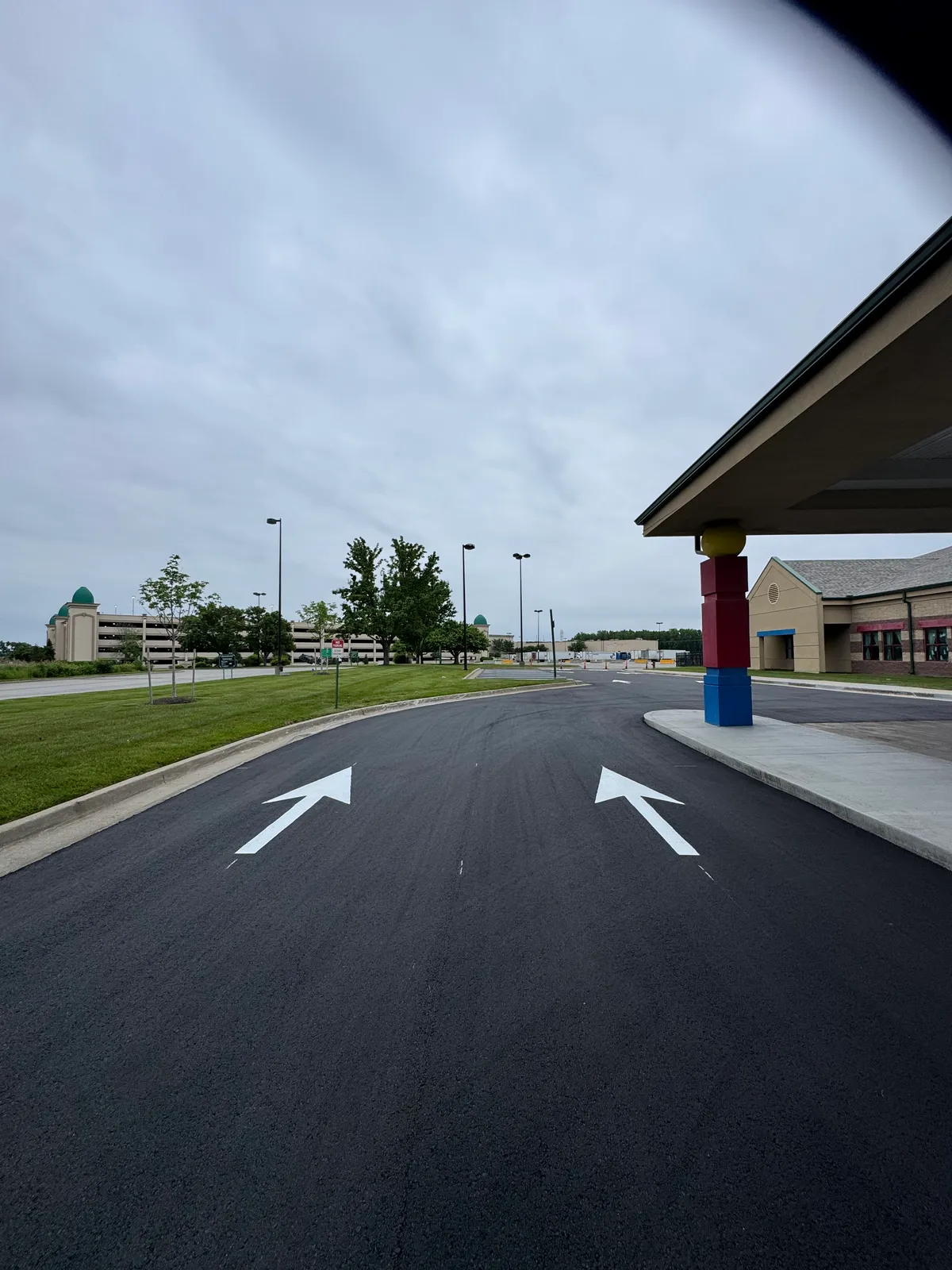
Missing Directional Arrows
Traffic flow confusion causing near-misses and customer complaints about navigation difficulty.
Worn Crosswalk Markings
Pedestrian safety zones barely visible, creating liability exposure for slip-and-fall claims.
What Affects Line Striping Pricing
Linear footage drives base pricing - a 100-stall lot has roughly 4,000 feet of lines versus 400 feet for a 10-stall lot. Layout complexity adds labor time; angled parking takes 40% longer than straight stalls due to precision requirements. Thermoplastic materials cost 8-10 times more than waterborne paint per gallon but coverage rates are similar. Stencil work for handicap symbols, directional arrows, and stop bars requires hand application at 3-4 times the rate of standard lines. Existing marking removal through grinding or waterblasting adds a complete second phase. Sealcoated lots need special primer for proper paint adhesion. Night or weekend work commands premium rates due to lighting equipment and overtime wages. Travel distance from our Cheyenne Avenue shop affects mobilization costs - properties in Lee's Summit or Olathe require extra windshield time. First-time layouts on new asphalt take longer than restriping existing patterns.
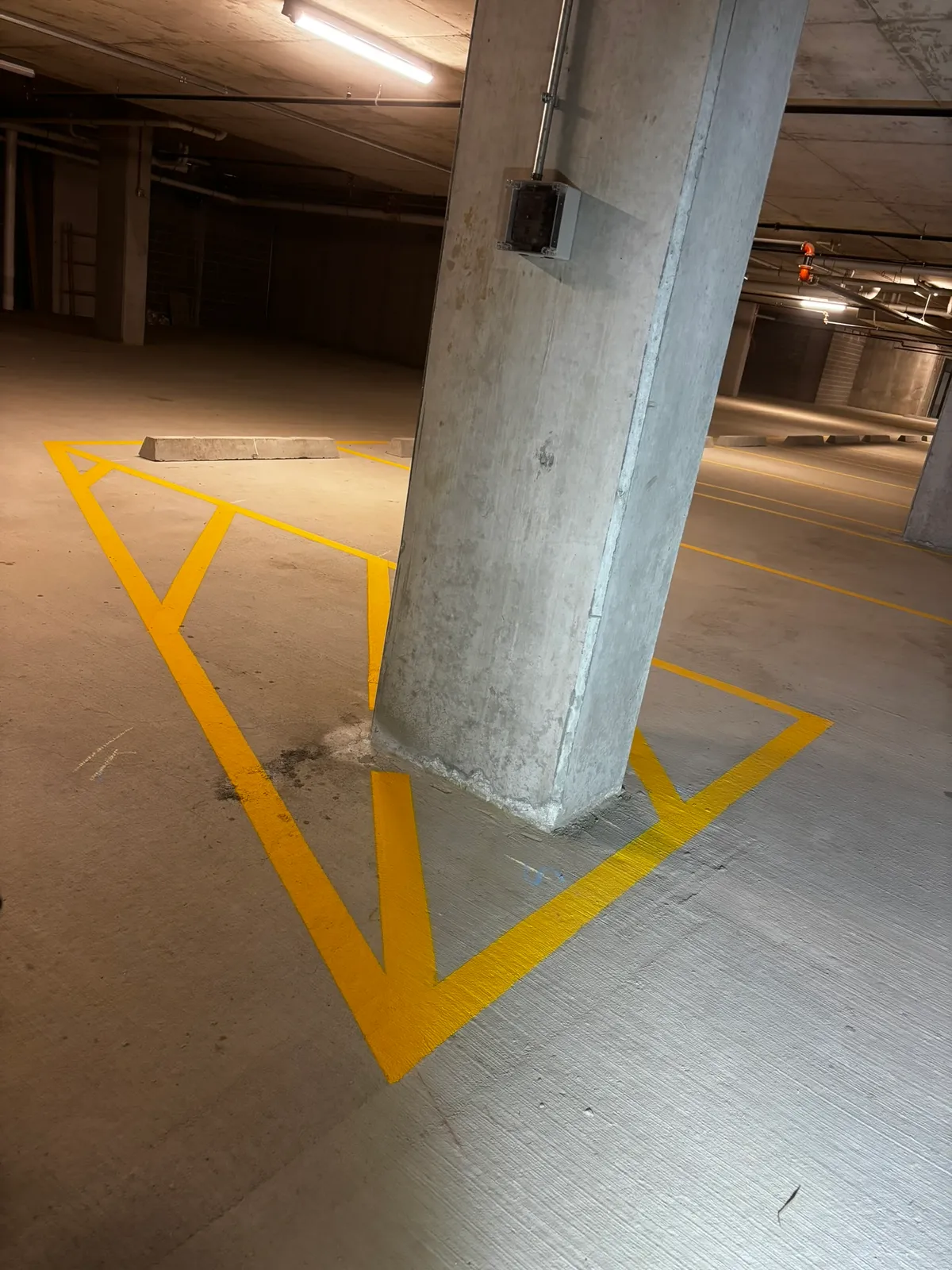
Get a Free Estimate — (913) 701-6044Recent Line Striping & Marking Projects
Line Striping & Marking — Frequently Asked Questions
How often should I restripe my commercial parking lot?
Standard waterborne paint needs restriping every 18-24 months in Kansas City's climate. Properties with heavy truck traffic or 24/7 operations might need annual touch-ups. Thermoplastic markings last 5-8 years but cost more upfront. Sealcoated lots require restriping immediately after sealing since the black surface covers existing lines. High-visibility areas like handicap spaces, fire lanes, and crosswalks often need refresh between full restriping cycles. Our 60+ years combined experience shows retail properties maintain better appearance with 18-month cycles, while industrial lots can stretch to 24-30 months.
Can you stripe in cold weather or should I wait for spring?
Waterborne paint requires minimum 50°F surface temperature and rising, limiting application to April through October in Kansas City. Thermoplastic works down to 35°F since it bonds through heat rather than drying. Morning dew common in Jackson County creates moisture issues even on sunny days - we start paint projects after 10 AM when surfaces dry completely. Early spring (March-April) offers ideal conditions before summer heat creates rapid drying that can leave brush marks. Fall striping must complete by early November before consistent freezing temperatures arrive. Emergency striping using specialized cold-weather paint is possible but won't match standard paint longevity.
What's included in ADA-compliant handicap space marking?
Each accessible space gets an 8-foot wide stall (11 feet for van-accessible) plus 5-foot access aisle with diagonal striping. We apply the international wheelchair symbol using precise steel stencil templates. Van-accessible spaces receive additional "VAN ACCESSIBLE" text marking. Blue paint meets Federal Color #15090 requirements. Access aisles get 4-inch diagonal lines spaced 36 inches apart. Proper slope verification ensures no more than 2% grade in any direction. Signs must be installed (by others) at 60-inch minimum height. Our crew documents each accessible space with photos for your compliance records. MUTCD compliance covers color, size, and placement standards that federal inspectors check.
Do you remove old markings before applying new striping?
Existing markings in good adhesion can be painted over directly, saving removal costs. Flaking or incompatible coatings require removal through grinding or waterblasting. Thermoplastic over paint needs complete removal since different expansion rates cause delamination. Layout changes for improved traffic flow or added spaces always require removing conflicting lines - ghost markings confuse drivers and look unprofessional. Grinding creates dust requiring containment on food service or medical properties. Waterblasting needs 24-hour drying time before new application. Minor layout adjustments might use black paint to cover old lines, though this shows through eventually. Each removal method adds different cost factors to your project.
How do you ensure straight lines and proper spacing?
Professional striping machines maintain consistent 4-inch line width through pressurized spray systems and guide wheels. Our operators pre-mark layouts using measuring wheels and chalk lines, ensuring 9-foot stall widths (or custom dimensions per your requirements). Curved areas get marked with radius templates before painting. String lines guide long straight runs like fire lanes. Reflective glass beads are dropped onto wet paint through calibrated dispensers for uniform nighttime visibility. Quality control includes measuring random stalls to verify consistency. Stencil work uses steel templates weighted to prevent wind movement. Three-person crews allow continuous quality checking - one marks, one operates the striper, one verifies dimensions. Joe's final inspection catches any variations before releasing your lot back to service.
Trusted Across the KC Metro
Ready to move forward?
One crew installs it, maintains it, and keeps it compliant — no subcontractors. Call (913) 701-6044 or send the form.
KC Metro Cities Where We Provide Line Striping & Marking
Line Striping & Marking — One Call Handles It
One call handles it all — from the first estimate to the final walkthrough. Platinum Paving has completed 4,000+ projects across the KC metro. Every job comes with our 1-year warranty.