Asphalt Milling Services for Kansas City Commercial Properties
Remove damaged asphalt layers with precision milling for stronger, longer-lasting parking lots.
Get your free Asphalt Milling estimate
Tell us about your property and we'll take a look — you'll hear back within 24 hours, or call (913) 701-6044 now.
- Free estimate, no obligation
- Response within 24 hours
- 1-year warranty on all work
- Owner-led — no subcontractors
What Asphalt Milling Is and Why Commercial Properties Need It
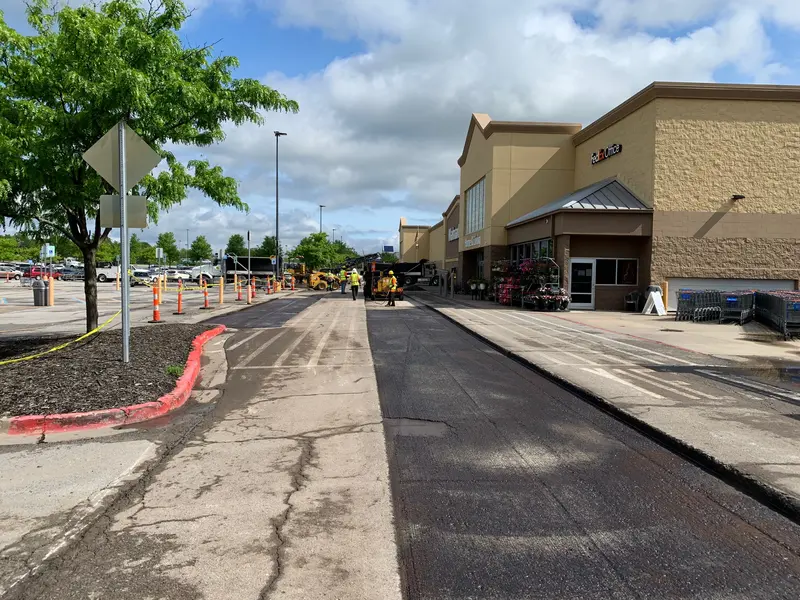
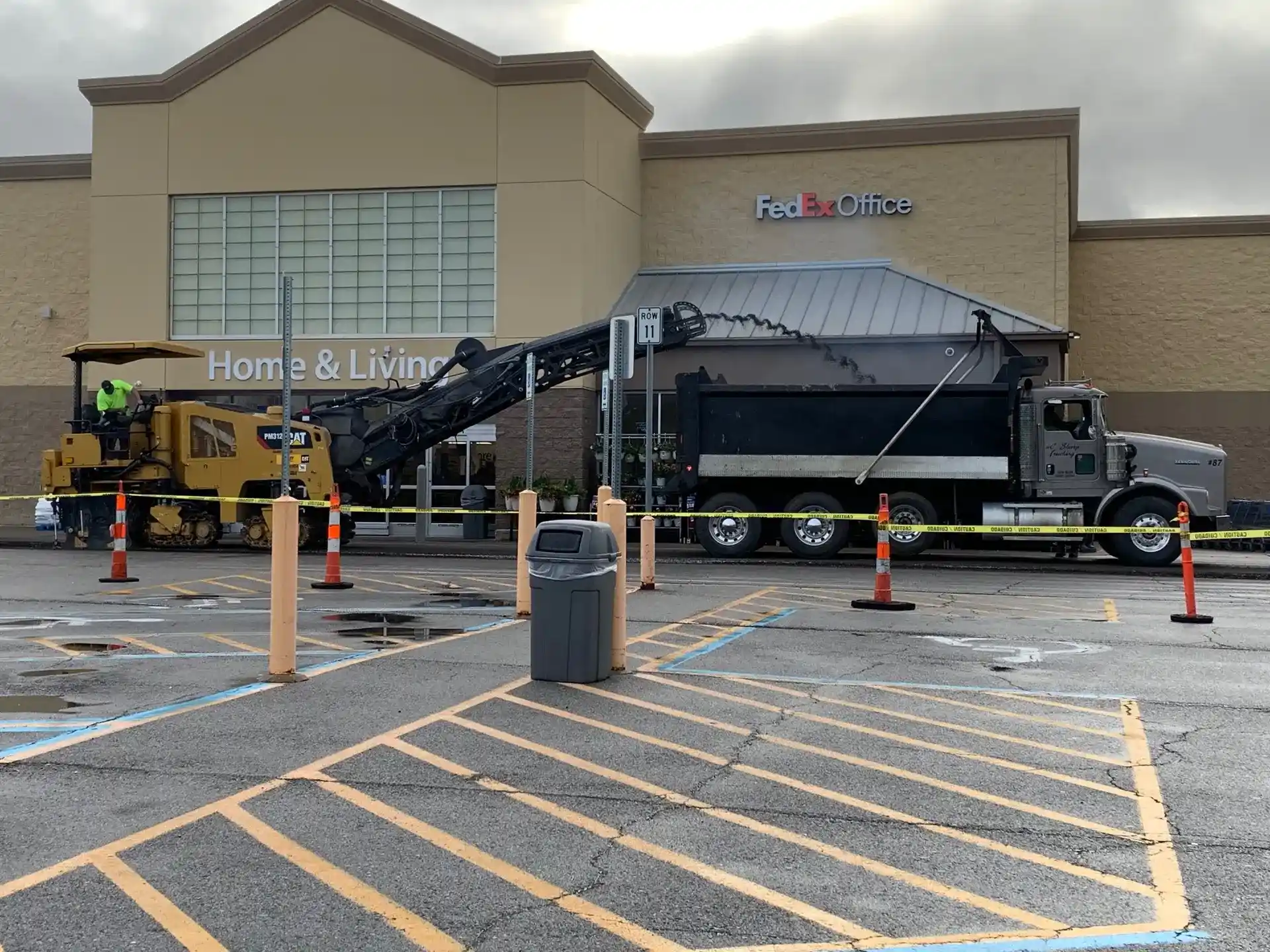
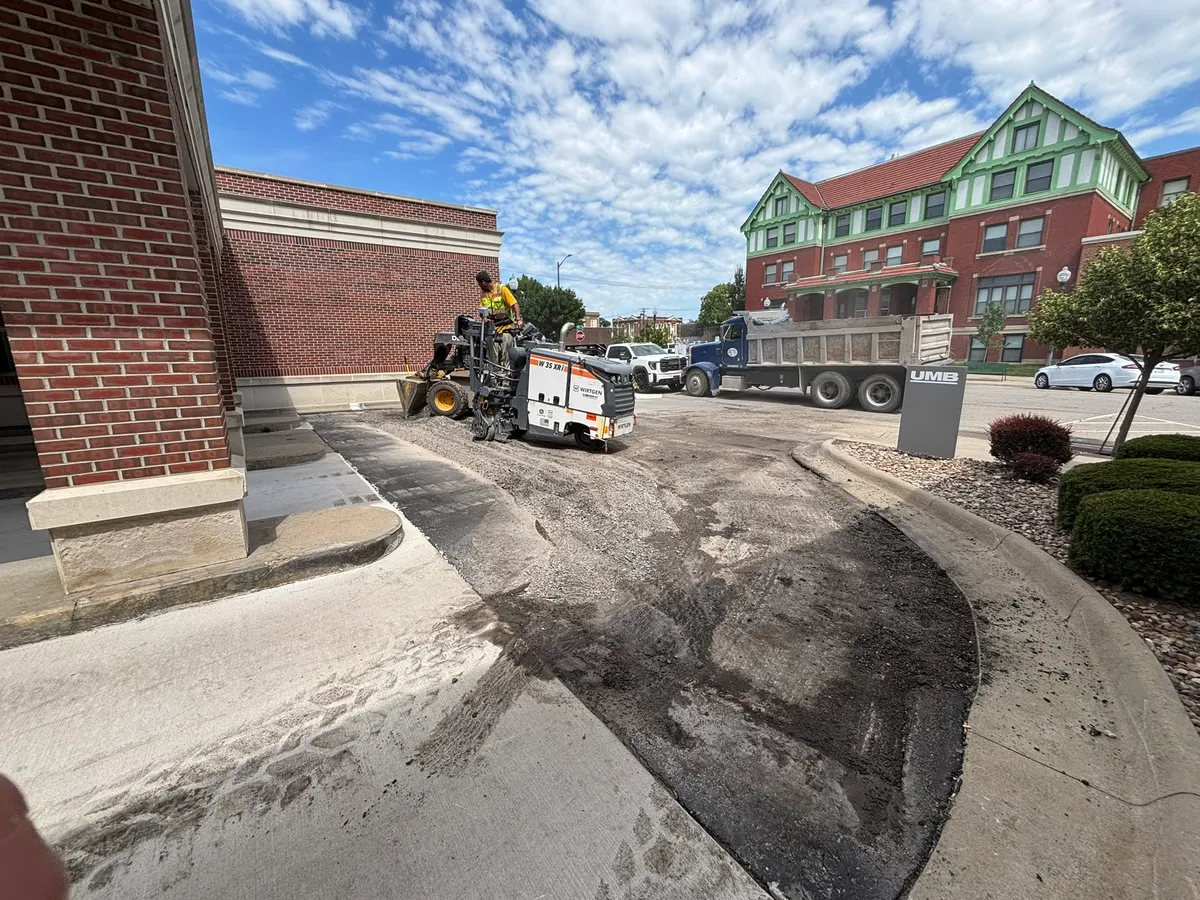
Asphalt milling uses specialized equipment called a cold planer to grind and remove the top layer of deteriorated asphalt from your parking lot. The milling machine's rotating drum cuts 1-4 inches deep, creating a uniform surface ready for fresh overlay. This process is essential when your asphalt shows widespread cracking, rutting, or oxidation that seal coating can't fix. Rather than tear out the entire parking lot, milling removes just the damaged surface layer while preserving the solid aggregate base course underneath. The removed material becomes reclaimed asphalt pavement (RAP) that gets recycled into new asphalt mix at plants like Hunt Midwest or APAC. With Kansas City's 100+ freeze-thaw cycles each winter causing constant expansion and contraction, milling every 15-20 years helps commercial properties maintain smooth, safe surfaces without the cost of full reconstruction. Union Pacific Railroad called us when their Topeka lot had rutted and cracked to the end of its service life; we milled the failed surface 1.5 to 2 inches down to stable base and laid a fresh overlay, restoring it without a full tear-out — see the full mill-and-overlay project in Topeka.
How Professional Milling Improves Parking Lot Drainage and Safety
Proper milling restores your parking lot's original cross-slope and pavement profile, critical for water management in Kansas City's 39-42 inches of annual rainfall. Over time, rutting from heavy trucks and settling clay soils create low spots where water pools, accelerating deterioration. Our milling machines equipped with automatic grade control systems remove material at precise depths, typically 1.5-2 inches, to reestablish proper drainage slopes of 1-2% minimum. The textured drum pattern left by the milling process also provides better traction than worn, polished asphalt – especially important during winter ice events. We pay special attention to transition cuts at building entrances, drive approaches, and catch basins to ensure smooth connections. For properties in Jackson County's heavy clay areas, correcting drainage through milling prevents subgrade saturation that leads to major structural failures. The fresh surface also eliminates trip hazards from raised cracks and uneven joints that create liability risks for property owners.
When to Choose Milling over Seal Coating or Full Replacement
Milling makes sense when your asphalt has moderate to severe surface distress but a stable foundation – typically when 25-40% of the surface shows alligator cracking, rutting deeper than 0.5 inches, or oxidation penetrating beyond the top quarter-inch. If core samples show good base thickness (minimum 6 inches aggregate) with no subgrade failure, milling saves 40-60% compared to full-depth replacement. Seal coating only works on structurally sound pavement with minor surface cracks. Once oxidation turns asphalt gray and brittle, or wheel paths show depression greater than 0.25 inches, seal coating becomes a waste of money. Full replacement is necessary when base failure causes widespread pumping, severe alligator cracking in wheel paths, or settlement exceeding 2 inches. The milling depth depends on damage severity – we typically remove 1.5 inches for surface distress, 2-3 inches for moderate rutting, or up to 4 inches when matching adjacent concrete sections.
Which Kansas City Businesses Benefit Most from Professional Asphalt Milling
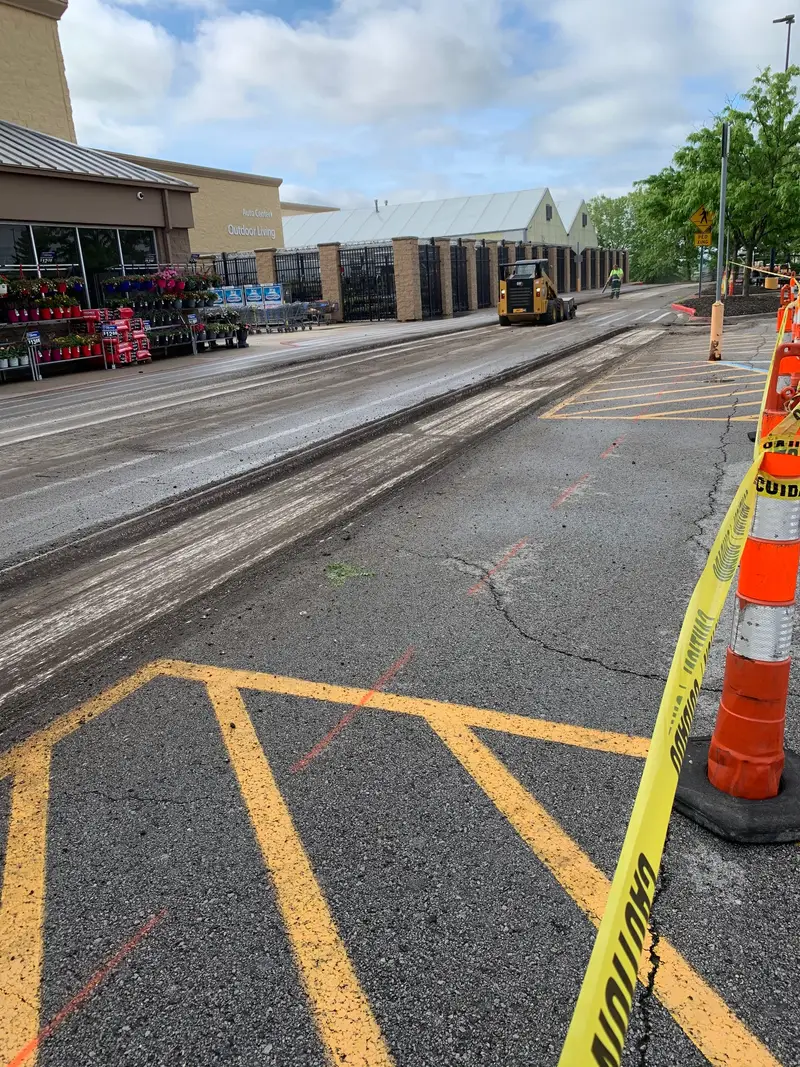
Distribution centers along I-435 and I-35 corridors rely on milling to handle constant semi-truck traffic that creates severe rutting in loading areas and drive lanes. Retail shopping centers use milling before major re-tenanting to refresh parking areas without disrupting business operations. Office complexes in Overland Park and Lee's Summit schedule milling every 15-20 years to maintain professional appearances and prevent liability issues. Industrial facilities near the rail yards need milling to correct drainage problems caused by heavy equipment traffic. Multi-family properties use partial-depth milling to address deteriorated drive lanes while preserving guest parking areas. Healthcare facilities require the precision of milling to maintain ADA-compliant slopes and smooth transitions at patient drop-off zones. The process works especially well for phased projects where businesses must stay operational – we can mill and pave sections overnight or during off-peak hours.
Need Asphalt Milling for Your Property?
Get a free estimate from the crew that has completed 4,000+ projects across the KC metro. No pressure, no obligation.
Cold Planing a Commercial Lot Down to Grade
What happens after you call your Kansas City paving contractor — from first inspection to final walkthrough.
We inspect your lot, identify every issue, and provide a detailed estimate — no cost, no pressure.
We design the scope of work around your business hours so your operations aren't disrupted.
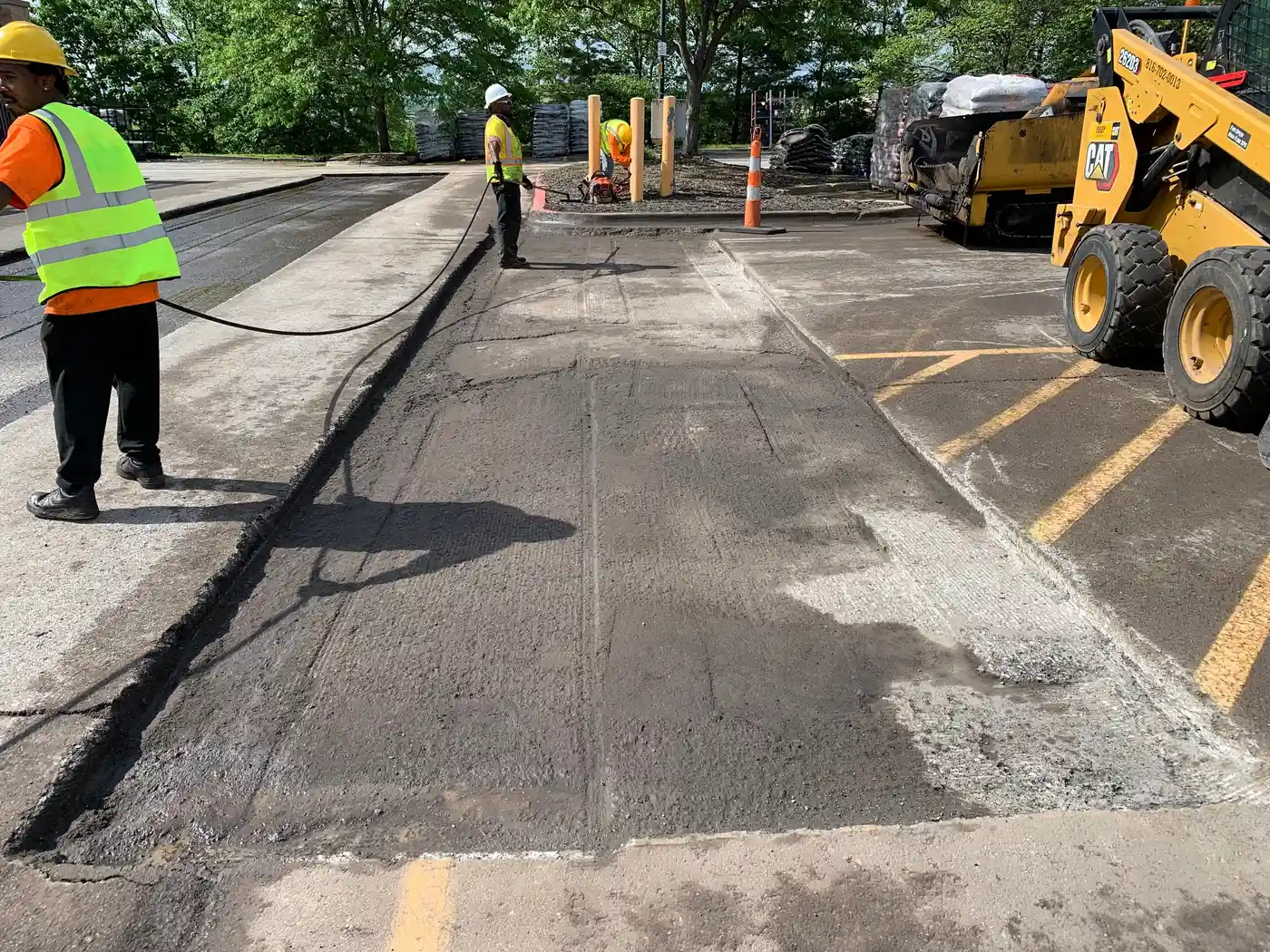
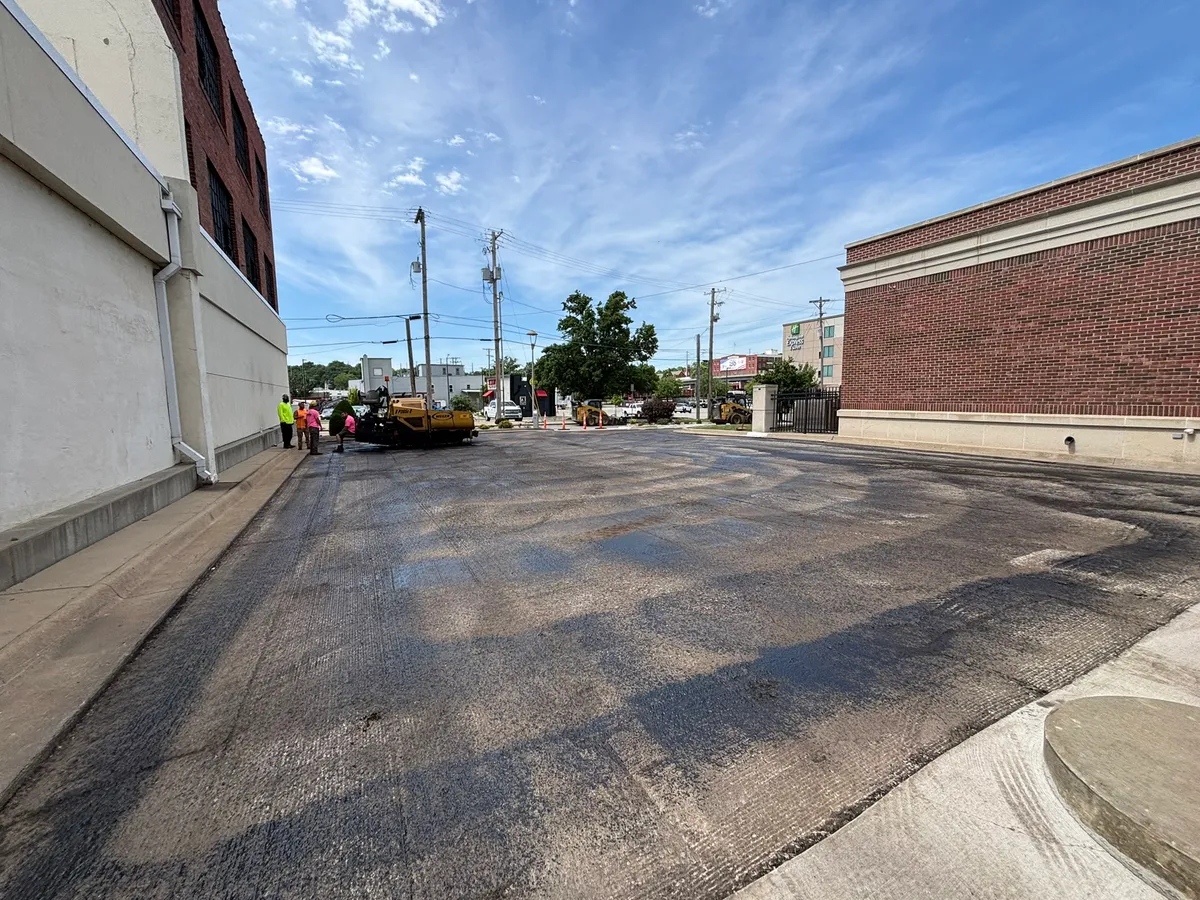
Old asphalt is milled down, debris cleared, and the base is prepared for a clean bond.
Fresh hot-mix asphalt is laid to spec and rolled to precise compaction with commercial-grade equipment.
Parking spaces, fire lanes, ADA markings, and signage — your lot is fully compliant and looks brand new.
We walk the finished project with you. If anything isn't right, we make it right before we leave.
Signs Your Property Needs Asphalt Milling
Widespread Alligator Cracking
Interconnected cracks resembling alligator skin indicate structural failure requiring removal of damaged layers.
Severe Wheel Path Rutting
Depressions exceeding 0.5 inches deep in traffic lanes cause water ponding and vehicle hydroplaning risks.
Extensive Surface Raveling
Loose aggregate and missing asphalt chunks create rough textures that accelerate deterioration.
Multiple Drainage Issues
Standing water in multiple lot areas shows lost surface slope requiring profile correction through milling.
Commercial Asphalt Milling Projects — Cost Factors
Project square footage and milling depth are primary cost drivers – removing 2 inches costs roughly 30% more than 1.5 inches due to increased material handling and disposal. Accessibility impacts pricing significantly; open parking lots cost less than confined areas requiring smaller equipment or hand work around islands and light poles. The amount of reclaimed asphalt pavement (RAP) hauling affects costs based on distance to recycling facilities. Projects requiring variable-depth milling for drainage correction need more sophisticated equipment and experienced operators. Edge milling along curbs, buildings, and utilities requires precision work that increases labor hours. Mobilization costs spread across larger projects, making 20,000 square foot jobs more economical per square foot than 5,000 square foot projects. Night or weekend work commands premium rates but may be necessary for 24-hour operations. The condition of the existing surface also matters – heavily oxidized or contaminated asphalt requires special handling and disposal procedures.
Get a Free Estimate — (913) 701-6044Recent Asphalt Milling Projects
Asphalt Milling — Frequently Asked Questions
How long does milling take for a typical 50,000 square foot parking lot?
A 50,000 square foot parking lot typically requires 2-3 days for complete milling operations. Our cold planer can remove approximately 20,000-25,000 square feet per day at standard 1.5-inch depth, depending on lot configuration. Factors like multiple handicap spaces, narrow drive aisles, or extensive curb work slow production rates. We coordinate RAP hauling throughout the day to maintain steady progress. Weather delays are rare since milling can proceed in temperatures from 35-95 degrees, though we avoid work during active precipitation to prevent clay soil contamination.
Can you mill around utilities and drainage structures without damage?
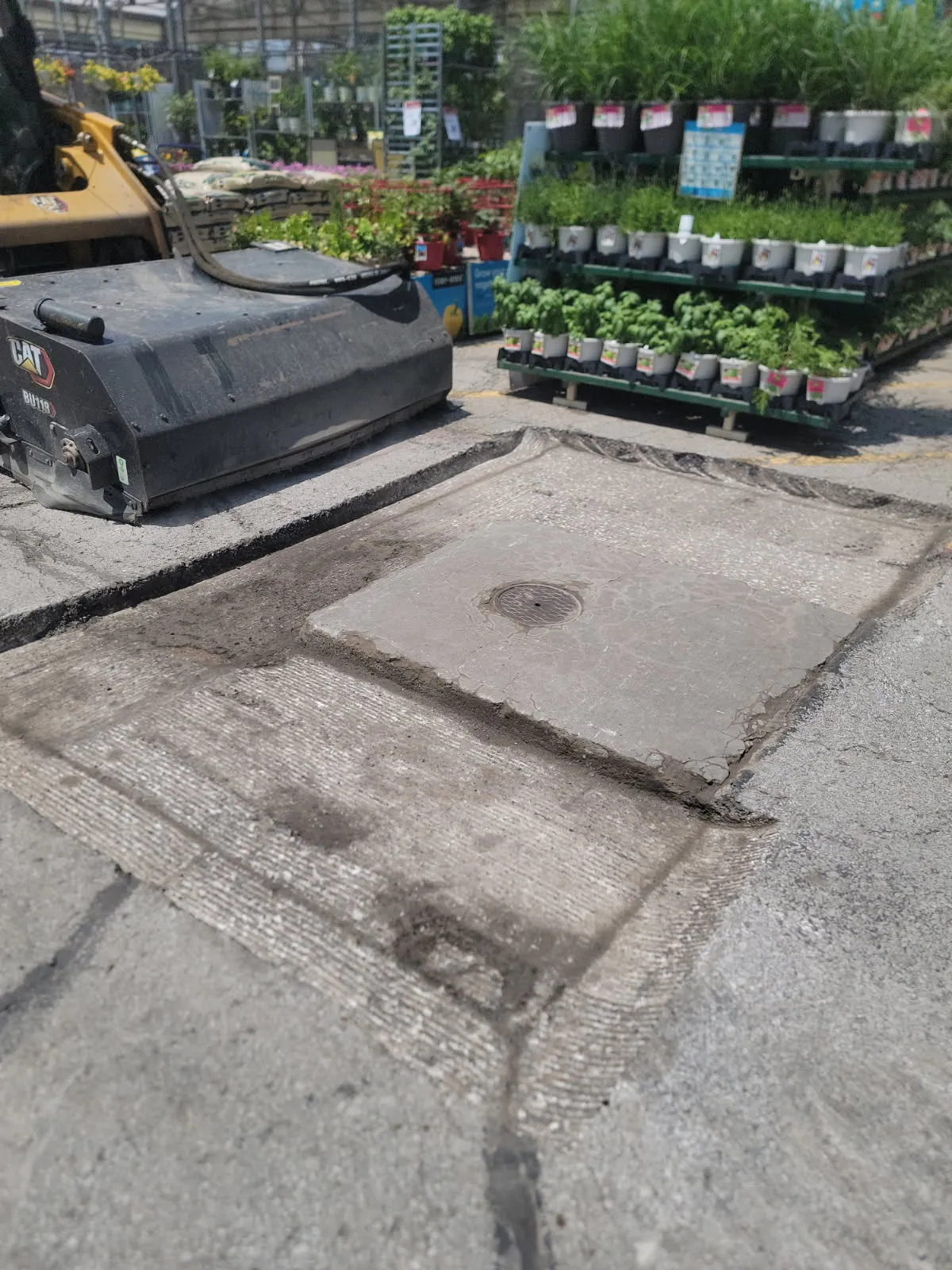
Yes, modern milling machines feature precise depth controls and experienced operators who identify utilities before starting. We hand-mark all visible features like manholes, valve boxes, and catch basins, then program the cold planer to automatically lift the drum when approaching these structures. For sub-surface utilities, we maintain minimum 1-inch clearance from any marked lines. The final 6-12 inches around each structure gets cleaned by hand or with smaller grinding equipment. This attention to detail prevents costly utility strikes while ensuring proper drainage flow at all connection points.
What happens to all the old asphalt that gets milled up?
Every ton of milled asphalt becomes reclaimed asphalt pavement (RAP) that local plants like Hunt Midwest and Ideker recycle into new hot mix. The RAP gets crushed, screened, and blended with virgin aggregate and oil to create sustainable pavement mixtures. Kansas City plants typically incorporate 15-25% RAP in standard mixes, reducing material costs and environmental impact. We haul RAP directly from your property to these facilities, where it's stockpiled and tested for contamination. This recycling process has operated efficiently in the KC metro for decades, making asphalt one of America's most recycled materials.
How soon after milling can you pave, and can tenants still access the property?
Paving can begin immediately after milling completion – often the same day for smaller sections. The milled surface provides excellent bonding for new asphalt and remains driveable at reduced speeds (15-20 mph) for several days if needed. Many clients choose to mill their entire lot, then pave in phases to maintain customer access. The rough texture from the drum pattern actually improves temporary traction compared to deteriorated asphalt. During Kansas City's March-November paving season, we coordinate milling and paving crews to minimize disruption, often completing both operations within 3-5 days total.
Will milling fix the soft spots and pumping areas in our truck loading zones?
Milling alone won't fix true base failure causing pumping or soft spots – these require deeper repairs. However, milling helps identify problem areas by exposing the aggregate base course for inspection. Isolated soft spots smaller than 100 square feet can receive full-depth patching after milling. Extensive pumping indicates saturated clay subgrade requiring excavation and stone stabilization before paving. Our 60+ years of experience in Kansas City's challenging soils helps determine whether spot repairs will suffice or if larger reconstruction is necessary. We test suspicious areas with a probe rod during the milling process.
Trusted Across the KC Metro
Ready to move forward?
One crew installs it, maintains it, and keeps it compliant — no subcontractors. Call (913) 701-6044 or send the form.
KC Metro Cities Where We Provide Asphalt Milling
Asphalt Milling — One Call Handles It
One call handles it all — from the first estimate to the final walkthrough. Platinum Paving has completed 4,000+ projects across the KC metro. Every job comes with our 1-year warranty.