
Pothole Repair in Kansas City — Fast, Permanent Commercial Fixes
Permanent pothole fixes that handle Kansas City's 100+ freeze-thaw cycles every winter.
Get your free Pothole Repair estimate
Tell us about your property and we'll take a look — you'll hear back within 24 hours, or call (913) 701-6044 now.
- Free estimate, no obligation
- Response within 24 hours
- 1-year warranty on all work
- Owner-led — no subcontractors
Understanding the Best Method for Fixing Parking Lot Potholes
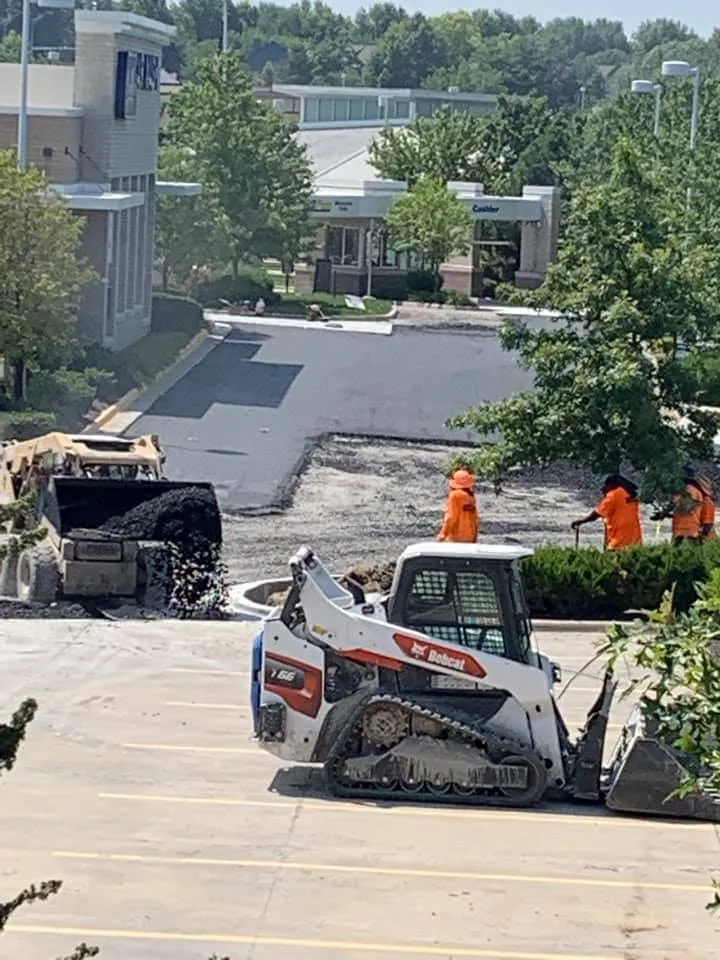
The best repair method depends on pothole depth and surrounding pavement condition. For shallow potholes (under 2 inches), infrared asphalt repair heats the existing asphalt to 325°F and blends new hot-mix asphalt into existing pavement. For deeper damage, we perform a saw-cut patch, removing failed material down to stable subgrade. Full-depth patches get 4-6 inches of compacted aggregate base before applying tack coat and new hot-mix asphalt. Throw-and-roll patches might save money initially, but they fail within months. Professional cut-and-patch repairs last 5-10 years when done correctly. Kansas City's heavy clay soils, especially in Jackson County, often cause subgrade failure beneath potholes. That's why we probe test every repair area first. If the base moves under a steel rod, we excavate deeper until hitting stable ground. Our 30-person crew handles both methods, with Joe Brogoto personally inspecting finished repairs.
Professional Pothole Repair Take — Timeline
Most parking lot pothole repairs take 2-4 hours from setup to reopening. Small infrared repairs (under 10 square feet) need just 45 minutes – the infrared heater takes 8-10 minutes to heat existing asphalt, then we scarify, add new material, and compact. Larger saw-cut patches require more time: cutting the perimeter takes 20 minutes, excavation and hauling 30-45 minutes, base installation and compaction another 30 minutes, then hot-mix installation. Kansas City's asphalt plants (Hunt Midwest, Ideker, APAC) deliver within 90 minutes, keeping material at proper 275-325°F installation temperature. Weather matters too. During our March-November asphalt season, morning repairs cure faster than afternoon jobs. Summer repairs when temps exceed 95°F actually take longer – we must cool fresh asphalt with water before reopening to traffic. Winter emergency repairs using cold patch are fastest but temporary. Plan permanent fixes for temps above 50°F.
Why Potholes Keep Coming Back in the Same Spots
Recurring potholes indicate underlying drainage or structural problems. Water infiltration causes 80% of repeat failures. When surface water penetrates through cracks into the aggregate base, Kansas City's 100+ annual freeze-thaw cycles turn that moisture into expanding ice, breaking apart the asphalt matrix. Clay subgrade compounds this – our local soils expand 10-15% when wet, creating hydraulic pressure from below. Simply filling the hole without addressing water intrusion guarantees another failure. Proper repairs require investigating beyond the visible damage. We check for nearby catch basin settlement, look for ponding patterns after rain, and test subgrade moisture content. Sometimes a 50-square-foot pothole needs 200 square feet of drainage correction. Load stress also creates repeat failures. Garbage trucks and delivery vehicles turning on the same spot compress subgrade differently than straight-rolling traffic. These areas need thicker asphalt sections – 4 inches minimum versus standard 3-inch parking lot depth.
Commercial Properties That Need Regular Pothole Repair
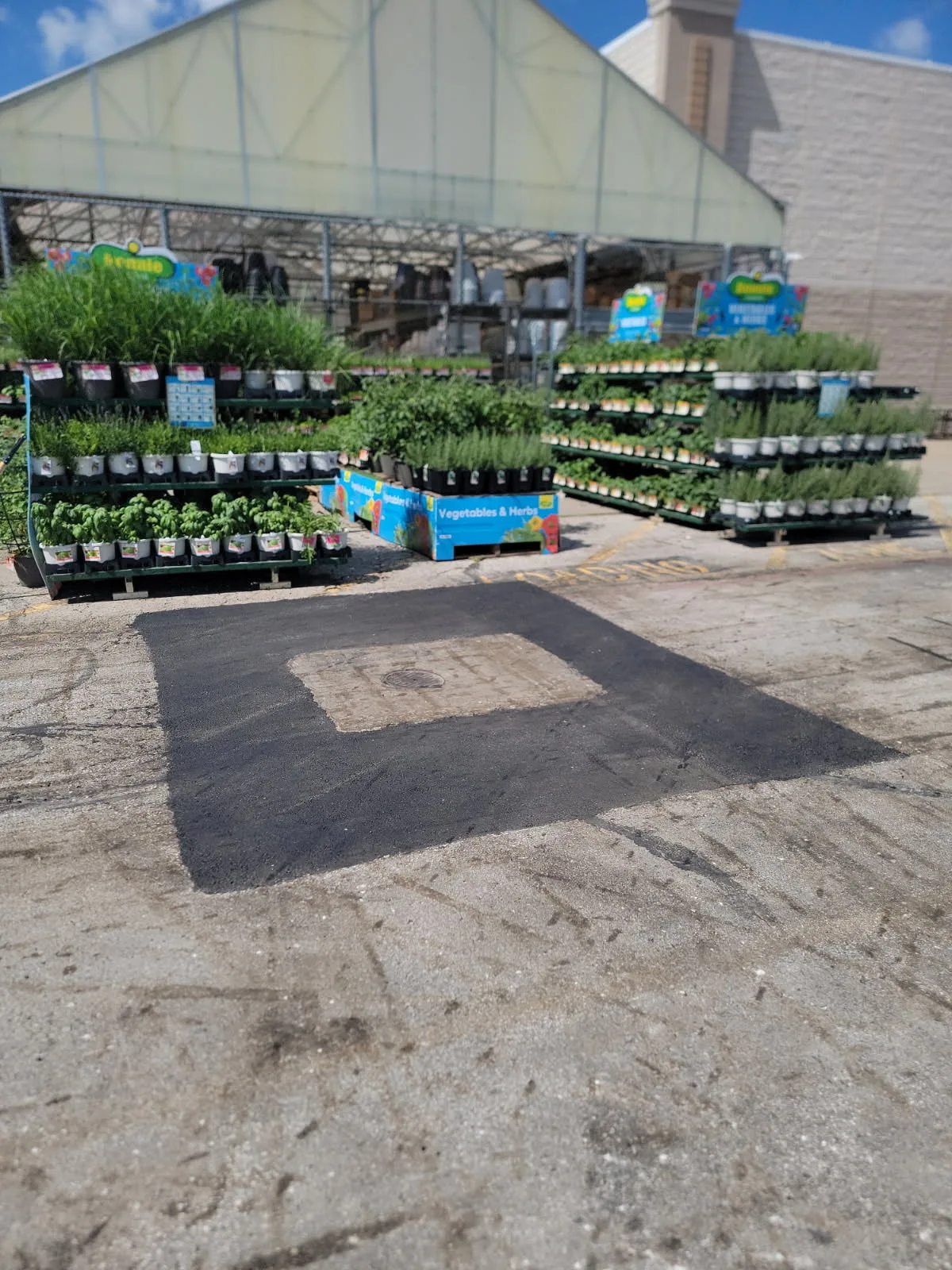
Distribution centers see the most pothole damage from constant semi-truck traffic and tight turning radii near loading docks. Retail shopping centers develop potholes along main drive aisles where delivery trucks service multiple stores daily. Medical facilities face liability concerns – ambulance bays and patient drop-off zones can't afford pothole hazards. Industrial parks with older asphalt (15+ years) need quarterly inspections as oxidation accelerates breakdown. Multi-family properties see concentrated damage near dumpster pads where waste trucks make weekly stops. Schools and churches might use lots intermittently, but concentrated traffic during events stresses weak spots. Office complexes typically develop potholes at entrance/exit throats where turning vehicles stress the pavement. Each property type requires different repair strategies based on traffic patterns and load requirements.
Need Pothole Repair for Your Property?
Get a free estimate from the crew that has completed 4,000+ projects across the KC metro. No pressure, no obligation.
Same-Day Pothole Repair: Sawcut, Excavate, Fill, Compact
What happens after you call your Kansas City paving contractor — from first inspection to final walkthrough.
We inspect your lot, identify every issue, and provide a detailed estimate — no cost, no pressure.
We design the scope of work around your business hours so your operations aren't disrupted.
Old asphalt is milled down, debris cleared, and the base is prepared for a clean bond.
Fresh hot-mix asphalt is laid to spec and rolled to precise compaction with commercial-grade equipment.
Parking spaces, fire lanes, ADA markings, and signage — your lot is fully compliant and looks brand new.
We walk the finished project with you. If anything isn't right, we make it right before we leave.
Signs Your Property Needs Pothole Repair
Alligator Cracking Patterns
Interconnected cracks resembling scales indicate base failure beneath the asphalt surface layer.
Standing Water Puddles
Depressions collecting rainfall show early-stage deterioration before actual holes form completely.
Loose Gravel Areas
Aggregate separating from asphalt binder signals advanced oxidation and imminent pothole formation.
Tire Noise Changes
Thumping sounds or steering wheel vibration indicates pavement voids developing beneath the surface.
What Determines Commercial Pothole Repair Pricing
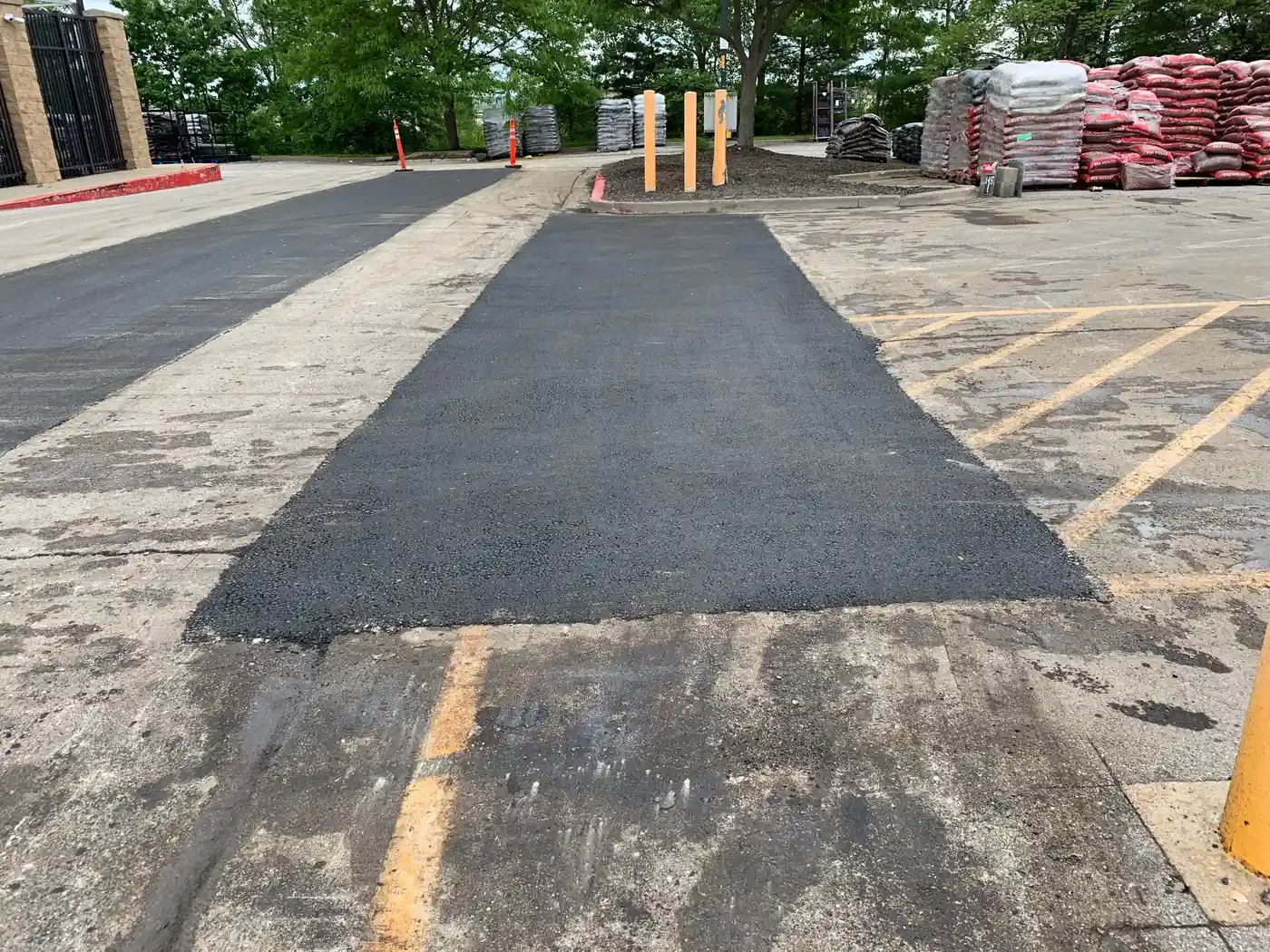
Repair costs vary based on depth, total square footage, and access complexity. Shallow surface repairs using infrared technology cost less than full-depth excavation requiring new aggregate base. Material prices fluctuate with oil markets – hot-mix asphalt contains liquid petroleum binders. Mobilization affects pricing too. Single pothole repairs carry higher per-square-foot costs than grouping multiple repairs in one visit. Emergency after-hours or weekend service commands premium rates. Location within your parking lot matters – repairs near active drive lanes need traffic control setup, adding labor hours. Subgrade conditions significantly impact cost. Stable limestone base allows standard repairs, while compromised clay subgrade requires over-excavation and imported fill material. Disposal fees for excavated material vary by quantity. Some repairs need saw-cutting through reinforced concrete edges, requiring specialized diamond blades. Cold winter patches cost less initially but need permanent repair come spring.
Get a Free Estimate — (913) 701-6044Recent Pothole Repair Projects
Pothole Repair — Frequently Asked Questions
Can you repair potholes during winter in Kansas City?
Yes, we perform emergency winter repairs using cold-mix asphalt when temperatures drop below 50°F. Cold patch material stays workable down to 20°F and provides temporary relief from liability hazards. However, these repairs typically last 2-4 months maximum. Kansas City's freeze-thaw cycles cause cold patches to pop out once spring arrives. Permanent hot-mix repairs require sustained temperatures above 50°F and dry conditions – typically April through November. For critical areas like emergency lanes or ADA routes, we'll apply multiple cold patches through winter, then schedule permanent repairs for the first warm week of spring. Many property managers budget for both winter maintenance patches and spring permanent repairs.
How many potholes can your crew fix in one day?
Our 30-person crew typically completes 15-25 pothole repairs per day, depending on size and method. Small infrared repairs (under 10 square feet each) move quickly – we can finish 30-40 daily with our three infrared units running simultaneously. Larger saw-cut patches slow production to 8-12 repairs daily since each requires excavation, base prep, and proper compaction. Mixed jobs combining both methods average 15-20 repairs. Weather impacts productivity too – our Kansas City crews work fastest in 60-80°F conditions. Extreme summer heat above 95°F requires cooling periods between repairs. Complex logistics like working around business hours or coordinating with multiple tenants also affects daily completion rates. Most commercial properties need 5-15 repairs per visit.
What's the difference between patching and actual pothole repair?
Patching typically means quick throw-and-roll fixes using cold-mix material shoveled into holes without preparation. These patches rarely last beyond one season because they don't bond with surrounding pavement or address underlying problems. Professional pothole repair involves systematic steps: marking the repair area, saw-cutting clean edges, excavating failed material, inspecting subgrade stability, installing new aggregate base if needed, applying tack coat for adhesion, placing hot-mix asphalt in lifts, and proper compaction achieving 92-96% density. Real repairs create monolithic bonds between new and existing asphalt. The difference shows in longevity – patches might survive 3-6 months while professional repairs last 5-10 years. Investment in proper repair methods reduces long-term maintenance costs significantly.
Should we repair potholes individually or wait to do multiple at once?
Grouping repairs saves money and minimizes business disruption, but waiting too long increases liability exposure and damage spread. Each pothole grows approximately 20-30% per month during freeze-thaw season. Small 1-square-foot holes become 10-square-foot craters within one Kansas City winter. Water infiltration from one pothole undermines surrounding asphalt, creating clusters of failures. We recommend quarterly inspections with repairs scheduled when you accumulate 5-10 potholes or any single hole exceeds 2 feet diameter. Emergency repairs for holes deeper than 3 inches or in high-traffic areas shouldn't wait. Most clients establish repair thresholds – fixing critical drive lanes immediately while accumulating parking stall repairs for batch service. This balanced approach manages costs while maintaining safe conditions.
How do you ensure pothole repairs match existing asphalt?
Matching existing asphalt involves several technical considerations. Fresh hot-mix appears black while oxidized pavement turns gray, creating visible patches for 6-12 months until natural weathering occurs. We minimize appearance differences by feathering repair edges and using infrared heating when possible – this method blends new material with old for flush, joint-free transitions. For high-visibility areas, we apply commercial-grade sealcoating 30 days after repairs to uniform the surface color. Texture matching requires attention to aggregate size. Standard Kansas City mixes use 3/8-inch aggregate, but some lots have 1/2-inch or 3/4-inch stone. We sample existing pavement to specify matching gradation from local plants. Elevation matching prevents lips or depressions – our crews use straightedges and laser levels to ensure repairs sit flush with surrounding pavement.
Trusted Across the KC Metro
Ready to move forward?
One crew installs it, maintains it, and keeps it compliant — no subcontractors. Call (913) 701-6044 or send the form.
KC Metro Cities Where We Provide Pothole Repair
Pothole Repair — One Call Handles It
One call handles it all — from the first estimate to the final walkthrough. Platinum Paving has completed 4,000+ projects across the KC metro. Every job comes with our 1-year warranty.