Commercial Concrete Paving in Kansas City — Sidewalks, Pads, and Flatwork
Heavy-duty Portland cement concrete parking lots built to handle Kansas City's 100+ freeze-thaw cycles.
Get your free New Concrete Paving estimate
Tell us about your property and we'll take a look — you'll hear back within 24 hours, or call (913) 701-6044 now.
- Free estimate, no obligation
- Response within 24 hours
- 1-year warranty on all work
- Owner-led — no subcontractors
What Makes Concrete the Right Choice for Kansas City Commercial Parking Lots
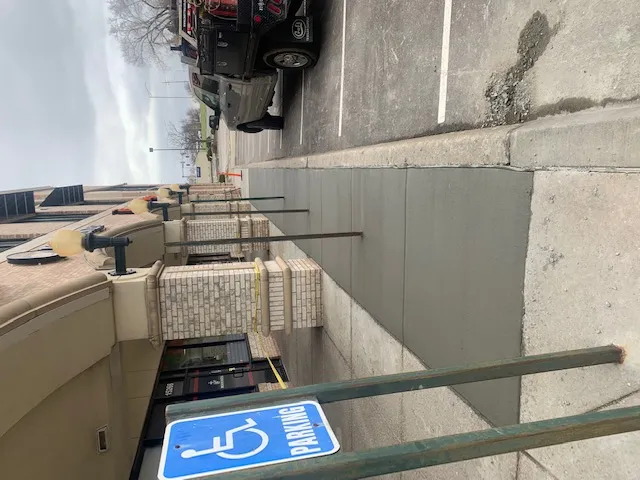
Concrete outperforms asphalt in freeze-thaw durability, especially with our metro's 100+ cycles each winter. Portland cement concrete maintains structural integrity through temperature swings from single digits to 95+ degrees. The rigid pavement distributes heavy truck loads across a wider area, reducing point loading that creates ruts and depressions. With proper air entrainment at 5-7% and a minimum 4,000 PSI rating, commercial concrete pavements handle de-icing salts better than asphalt. The light color reflects heat, keeping surface temperatures 20-30 degrees cooler in summer. This thermal advantage reduces urban heat island effects around your building. Control joints every 12-15 feet and expansion joints at building connections prevent random cracking. Our slip-form paving equipment achieves consistent 6-8 inch thickness across entire lots, eliminating thin spots that plague hand-poured installations.
How Long Commercial Concrete Paving Installation Takes
A typical 50,000 square foot parking lot takes 10-14 days from excavation to striping. Subgrade preparation consumes 3-4 days, especially in Jackson County's heavy clay soils that require 12-18 inches of engineered fill. We stabilize problem areas with geotextile fabric and Type 5 aggregate base. Rebar grid installation and dowel bar placement at joints takes another 2 days. The actual concrete pour happens in one continuous operation using our convoy of ready-mix trucks delivering 350-400 cubic yards. Broom finish texturing occurs immediately while concrete remains workable. The critical curing period lasts 7 days minimum, during which we apply curing compound and maintain moisture. Final saw-cutting of control joints happens within 24 hours to prevent random cracking. Weather delays average 2-3 days per project during our March through November construction season. The same base-first discipline applies to specialty concrete like custom pavers: when Prairie Band Casino & Resort in Mayetta needed branded logo pavers reset at its main entrance, we inspected and corrected the sub-base before setting a single unit — a compromised base is the most common reason paver installations fail early. See the Prairie Band Casino project.
What Thickness and Reinforcement Do Commercial Lots Need
#4 rebar on 18-inch centers creates the structural grid for standard commercial traffic. Heavy truck routes require #5 bars on 12-inch spacing. Minimum thickness starts at 6 inches for employee parking, increasing to 8 inches for delivery zones and 10 inches for dumpster pads. We place smooth dowel bars at every construction joint, allowing thermal movement while maintaining load transfer. Wire mesh alone won't cut it for commercial applications - proper rebar placement prevents the settlement cracks that destroy parking lots. Our laser screed equipment maintains thickness tolerance within 1/4 inch across the entire pour. Edge thickening to 8 inches along perimeters adds strength where snow plows impact. The PCC mix design includes Type I/II cement with Class F fly ash for durability. Proper concrete coverage over rebar - minimum 2 inches from surface - prevents corrosion from de-icing chemicals.
Which Kansas City Businesses Benefit Most from Concrete Paving
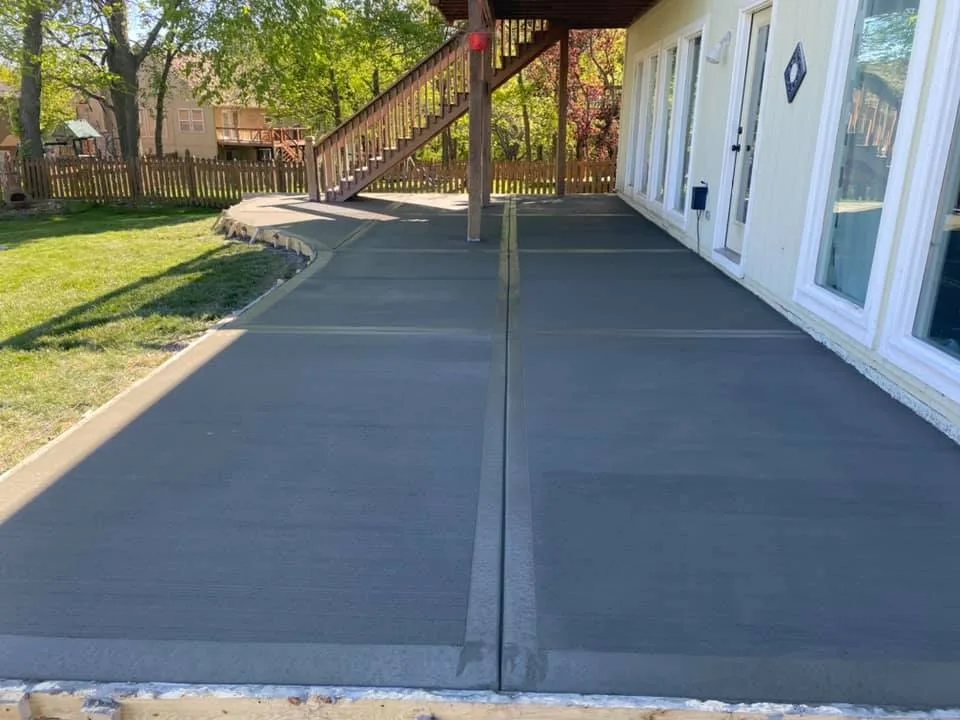
Distribution centers and trucking terminals choose concrete for 40-year service life under constant semi traffic. Medical facilities require the stability and cleanliness of concrete surfaces that won't track petroleum products into buildings. Food service and grocery stores appreciate concrete's resistance to oils and cleaning chemicals. Multi-story parking garages demand concrete's load-bearing capacity and fire resistance ratings. Manufacturing plants with outdoor storage need concrete's strength for heavy equipment and material staging. School districts invest in concrete for bus lots that endure daily abuse. Municipal fleet yards specify concrete to handle everything from dump trucks to emergency vehicles. The smooth, light-colored surface improves visibility and reduces lighting requirements by 30%. Snow removal proceeds faster on concrete's uniform surface compared to deteriorating asphalt.
Need New Concrete Paving for Your Property?
Get a free estimate from the crew that has completed 4,000+ projects across the KC metro. No pressure, no obligation.
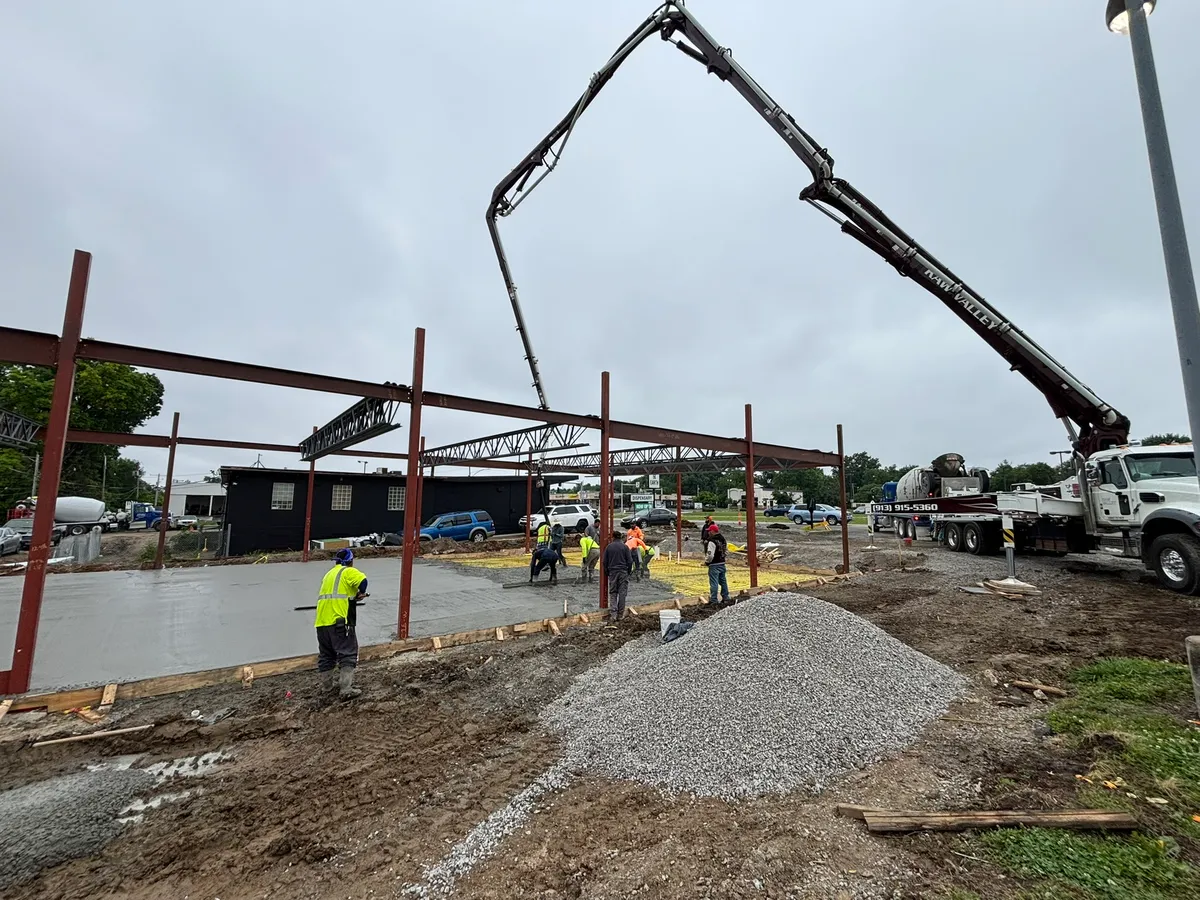
Forming, Pouring, and Finishing a Commercial Concrete Slab
What happens after you call your Kansas City paving contractor — from first inspection to final walkthrough.
We inspect your lot, identify every issue, and provide a detailed estimate — no cost, no pressure.
We design the scope of work around your business hours so your operations aren't disrupted.
Old asphalt is milled down, debris cleared, and the base is prepared for a clean bond.
Fresh hot-mix asphalt is laid to spec and rolled to precise compaction with commercial-grade equipment.
Parking spaces, fire lanes, ADA markings, and signage — your lot is fully compliant and looks brand new.
We walk the finished project with you. If anything isn't right, we make it right before we leave.
Signs Your Property Needs New Concrete Paving
Alligator Cracking Everywhere
Interconnected cracks creating small blocks indicate complete structural failure of existing pavement.
Standing Water Issues
Puddles lasting hours after rain mean improper grading that concrete's precise installation can fix.
Liability Insurance Concerns
Trip hazards from deteriorating asphalt edges and potholes increase premises liability exposure significantly.
Constant Patching Cycles
Monthly asphalt repairs costing thousands annually signal time for concrete's 40-year solution.
What Determines Commercial Concrete Paving Project Costs
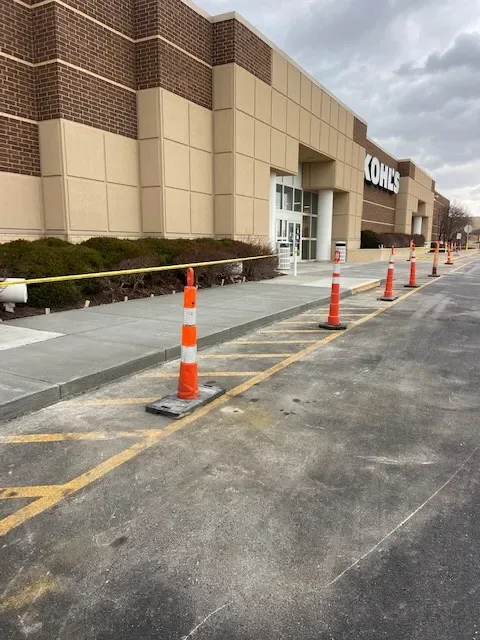
Site conditions drive 40% of project pricing, particularly soil stability and drainage requirements. Parking lots built on fill dirt need deeper excavation and engineered backfill. Thickness requirements vary by traffic type - standard cars versus delivery trucks versus fire lanes. Reinforcement upgrades from wire mesh to rebar grids add material and labor hours. Complex layouts with multiple radius curves require additional forming work compared to simple rectangular lots. Accessibility affects concrete delivery - tight sites may require pumping instead of direct chute placement. Special finishes like exposed aggregate or colored concrete increase square foot rates. Removal and disposal of existing pavement adds trucking and landfill fees. Winter pours require heated enclosures and additives. Joint spacing and type - tooled versus sawed - impact final pricing.
Get a Free Estimate — (913) 701-6044Recent New Concrete Paving Projects
New Concrete Paving — Frequently Asked Questions
How soon can we use our new concrete parking lot after installation?
Light vehicle traffic can resume after 7 days, but heavy trucks need 14-28 days depending on weather conditions. Concrete reaches 70% strength at 7 days and full 4,000 PSI rating at 28 days. Early loading causes permanent damage, especially at joints and edges. We provide detailed staging plans to maintain business operations during curing. Partial lot closures allow phased construction and gradual reopening. Temperature affects curing speed - summer pours gain strength faster than late fall projects.
Will concrete crack in Kansas City's freeze-thaw climate?
Properly designed concrete handles freeze-thaw cycles through controlled cracking at predetermined locations. Control joints every 12-15 feet create weak planes where hairline cracks form harmlessly. Air entrainment creates billions of microscopic voids that accommodate freezing water expansion. Without these design features, random cracks destroy concrete within 5 years. Our mix designs account for Kansas City's 100+ annual freeze-thaw cycles. Joint sealing with hot-pour rubberized sealant prevents water infiltration that accelerates deterioration.
What's the real lifespan difference between concrete and asphalt parking lots?
Commercial concrete lots typically serve 30-40 years versus 15-20 years for asphalt in Kansas City conditions. Concrete maintenance involves joint resealing every 5-7 years and occasional slab replacement. Asphalt requires seal coating every 3 years, crack filling annually, and overlay at 10-12 years. Total lifecycle costs favor concrete by 30-50% despite higher initial investment. Heavy truck traffic areas show even greater concrete advantages. Many 1980s concrete lots remain serviceable today with minimal repairs.
Do you handle the drainage and ADA compliance requirements?
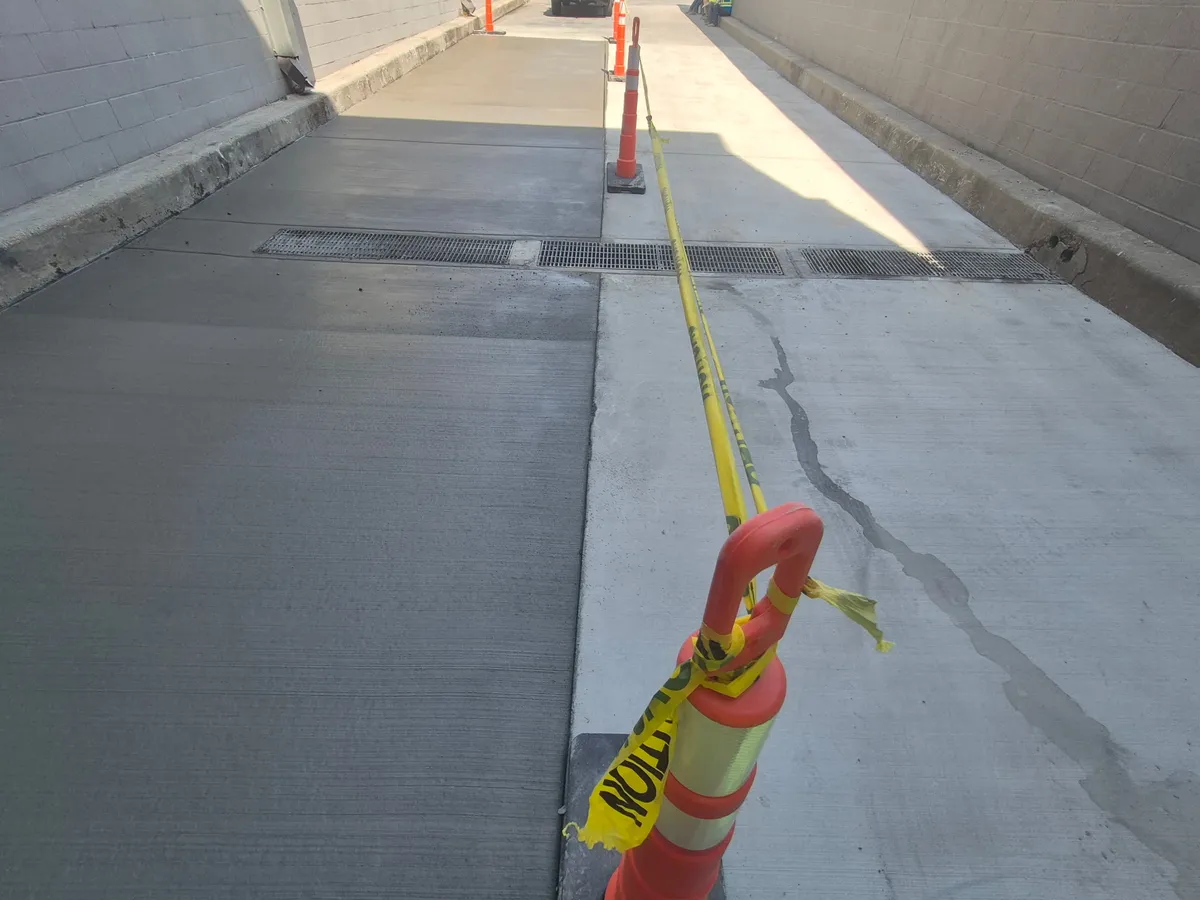
Complete drainage design comes standard with every project, meeting Johnson County and KCMO stormwater regulations. We establish minimum 1% slopes for positive drainage while maintaining ADA-compliant 2% maximum in accessible routes. Trench drains at building entries prevent water infiltration. Detention calculations ensure compliance with post-construction runoff limits. ADA parking spaces get special attention - proper slopes, stable surfaces, and compliant access aisles. Our surveying equipment maintains tolerances within 1/8 inch for accessibility requirements.
Can you pour concrete year-round in Kansas City?
Concrete placement continues through winter with proper cold-weather procedures and additives. Heated enclosures protect fresh concrete when temperatures drop below 40 degrees. Accelerating admixtures reduce set time and achieve early strength. Ground heaters thaw frozen subgrade before placement. Hot water in the mix maintains 50-degree concrete temperature at placement. Winter pours cost 15-25% more but allow year-round scheduling. We monitor forecast closely and won't risk your investment on marginal weather days. Spring and fall offer ideal conditions for concrete work.
Trusted Across the KC Metro
Ready to move forward?
One crew installs it, maintains it, and keeps it compliant — no subcontractors. Call (913) 701-6044 or send the form.
KC Metro Cities Where We Provide New Concrete Paving
New Concrete Paving — One Call Handles It
One call handles it all — from the first estimate to the final walkthrough. Platinum Paving has completed 4,000+ projects across the KC metro. Every job comes with our 1-year warranty.