Commercial Sealcoating in Kansas City — Protect Your Asphalt Investment
Extend your pavement's life 5–7 years with professional-grade asphalt sealcoating applied by our 30-person crew.
Get your free Commercial Sealcoating estimate
Tell us about your property and we'll take a look — you'll hear back within 24 hours, or call (913) 701-6044 now.
- Free estimate, no obligation
- Response within 24 hours
- 1-year warranty on all work
- Owner-led — no subcontractors
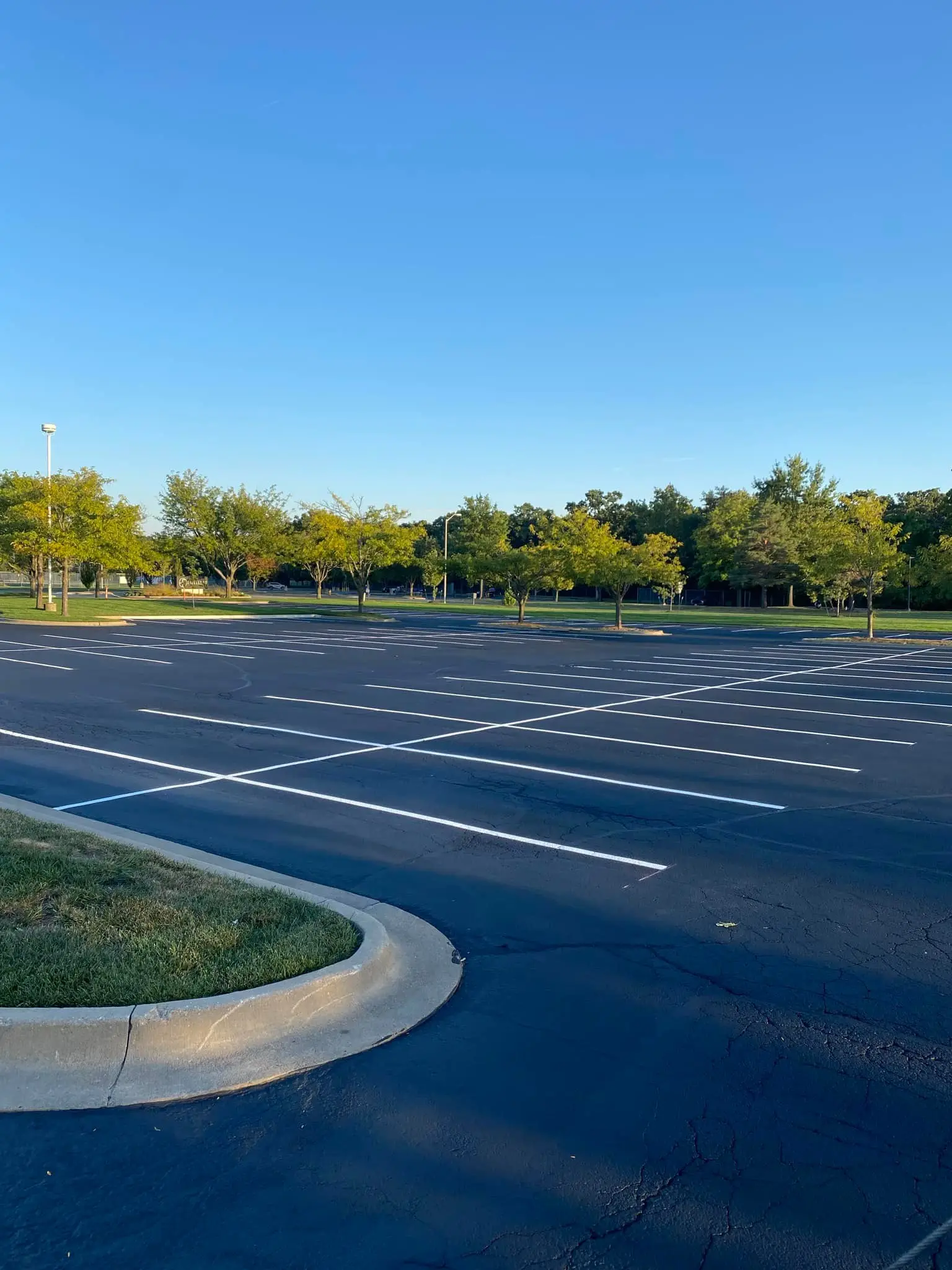
Sealcoating Protects Kansas City Parking Lots from Weather Damage
Sealcoating creates a protective barrier that shields asphalt from Kansas City's 100+ annual freeze-thaw cycles. When water penetrates unsealed asphalt and freezes, it expands by 9%, creating cracks that grow wider with each cycle. A properly applied emulsion-based sealcoat fills surface voids and prevents water infiltration, blocking this destructive process. The coating also reflects UV rays that break down asphalt binder, preventing oxidation that turns pavement gray and brittle. With summer temperatures exceeding 95°F and winter lows in single digits, unprotected asphalt deteriorates 40% faster in our climate. Professional-grade coal tar sealant or asphalt emulsion sealer applied at 0.17-0.25 gallons per square yard provides 3-5 years of protection. Our crews apply two coats using either squeegee application for heavy-traffic areas or spray application for large lots, achieving optimal 16-20 mil thickness that withstands Missouri's heavy clay soil movement and Kansas's limestone base shifting.
Coal Tar vs Asphalt Emulsion Sealers
Coal tar sealant offers superior resistance to petroleum products, making it ideal for gas stations, truck stops, and heavy equipment yards where oil and fuel spills are common. This refined coal tar pitch creates a harder surface that resists tracking and provides better color retention—staying jet black longer. Asphalt emulsion sealer, made from the same base material as your pavement, bonds better with existing asphalt and remains more flexible during temperature swings. It's environmentally preferred and cures faster—24-48 hours versus 48-72 hours for coal tar in optimal conditions. Coal tar performs better against de-icing salts used heavily throughout Jackson and Johnson counties, while asphalt emulsion handles the expansion-contraction cycles better on lots built over KC's notorious blue clay. Both products require surface temperatures above 50°F and no rain for 24 hours post-application. We stock both materials from Martin Asphalt and GemSeal, selecting based on your lot's specific traffic patterns and exposure risks.
When Should Commercial Properties Schedule Sealcoating in Kansas City
The optimal sealcoating window in Kansas City runs from late April through early October, when overnight temperatures stay above 50°F for proper cure time. New asphalt needs 90-180 days to cure before first application—rushing this causes poor adhesion and premature failure. After initial sealcoating, reapply every 3-5 years depending on traffic volume and lot condition. High-traffic retail centers need it every 3 years, while light-use office parks can stretch to 5 years. Schedule work Tuesday through Thursday to minimize business disruption, allowing the weekend for full curing. Avoid March's freeze-thaw volatility and November's early freezes that prevent proper bonding. The 42 inches of annual precipitation means planning around dry windows is critical. Properties along I-435 or I-70 with heavy truck traffic should consider annual inspections, as diesel spills and turning truck tires accelerate wear. Our crews complete most 50,000-square-foot lots in one day, with lots accessible to traffic within 24-48 hours using fast-dry additives when needed.
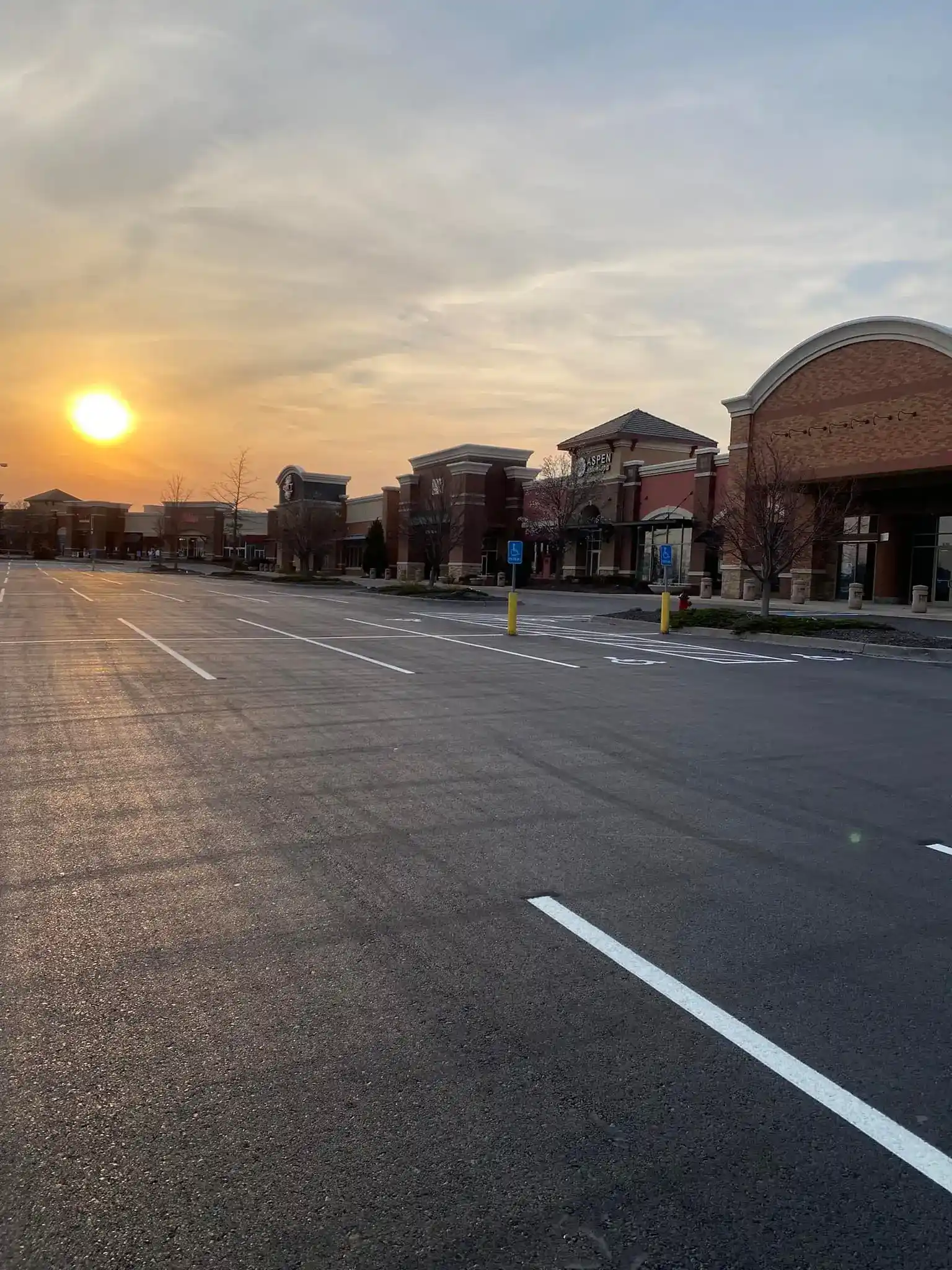
Which Kansas City Businesses Benefit Most from Regular Sealcoating
Distribution centers along the I-435 corridor see extreme wear from constant semi-truck traffic, requiring sealcoating every 2-3 years to prevent load-bearing failure. Retail shopping centers from Ward Parkway to Independence Center need regular applications to maintain curb appeal and prevent slip-fall liability from deteriorating surfaces. Medical facilities and office complexes benefit from weekend applications that don't disrupt patient or employee parking. Restaurant parking lots face unique challenges from grease, food spills, and delivery truck traffic, making coal tar sealant the preferred choice for oxidation protection. Industrial properties near the Kansas River and Missouri River industrial corridors deal with chemical exposure and heavy machinery, requiring specialized sealant formulations. Schools and churches throughout Johnson and Wyandotte counties typically schedule work during summer breaks, protecting their lots from bus traffic and snow plow damage while maintaining safe surfaces for families.
Need Commercial Sealcoating for Your Property?
Get a free estimate from the crew that has completed 4,000+ projects across the KC metro. No pressure, no obligation.
Sealcoating a Parking Lot From Prep to Cure
What happens after you call your Kansas City paving contractor — from first inspection to final walkthrough.
We inspect your lot, identify every issue, and provide a detailed estimate — no cost, no pressure.
We design the scope of work around your business hours so your operations aren't disrupted.
Old asphalt is milled down, debris cleared, and the base is prepared for a clean bond.
Fresh hot-mix asphalt is laid to spec and rolled to precise compaction with commercial-grade equipment.
Parking spaces, fire lanes, ADA markings, and signage — your lot is fully compliant and looks brand new.
We walk the finished project with you. If anything isn't right, we make it right before we leave.
Signs Your Property Needs Commercial Sealcoating
Gray, Oxidized Surface
Asphalt turning light gray indicates UV damage and binder deterioration requiring immediate sealcoating.
Visible Aggregate Exposure
Small stones showing through worn asphalt means the protective layer is gone.
Linear Cracking Patterns
Interconnected cracks wider than 1/8 inch signal water infiltration damage accelerating rapidly.
Oil Spot Deterioration
Soft, damaged areas from automotive fluids eating through unprotected asphalt surfaces.
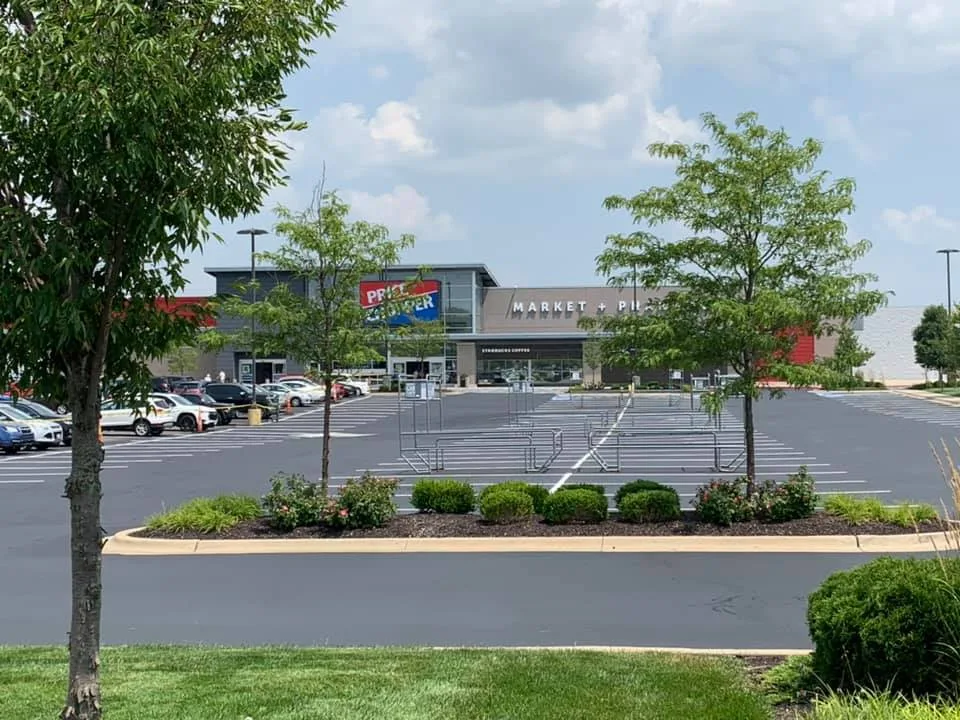
What Determines Commercial Sealcoating Project Costs
Square footage drives the base calculation, but surface condition significantly impacts final pricing. Lots requiring extensive crack filling or pothole repair before sealcoating add preparation costs. The number of coats needed—typically two for standard lots, three for heavy-wear areas—affects material quantities. Application method influences labor costs, with squeegee application taking 40% longer than spray application but providing thicker coverage. Parking lot layout complexity, including islands, drive-thrus, and loading docks, increases hand-work time. Material selection between coal tar and asphalt emulsion creates a 15-20% cost variance. Projects requiring night or weekend work to avoid business disruption include crew overtime rates. Striping typically adds to the project scope, as fresh sealcoat requires new parking space and directional markings. Distance from our Cheyenne Avenue facility affects mobilization costs, though most metro locations fall within our standard service area from Olathe to Liberty.
Get a Free Estimate — (913) 701-6044Recent Commercial Sealcoating Projects
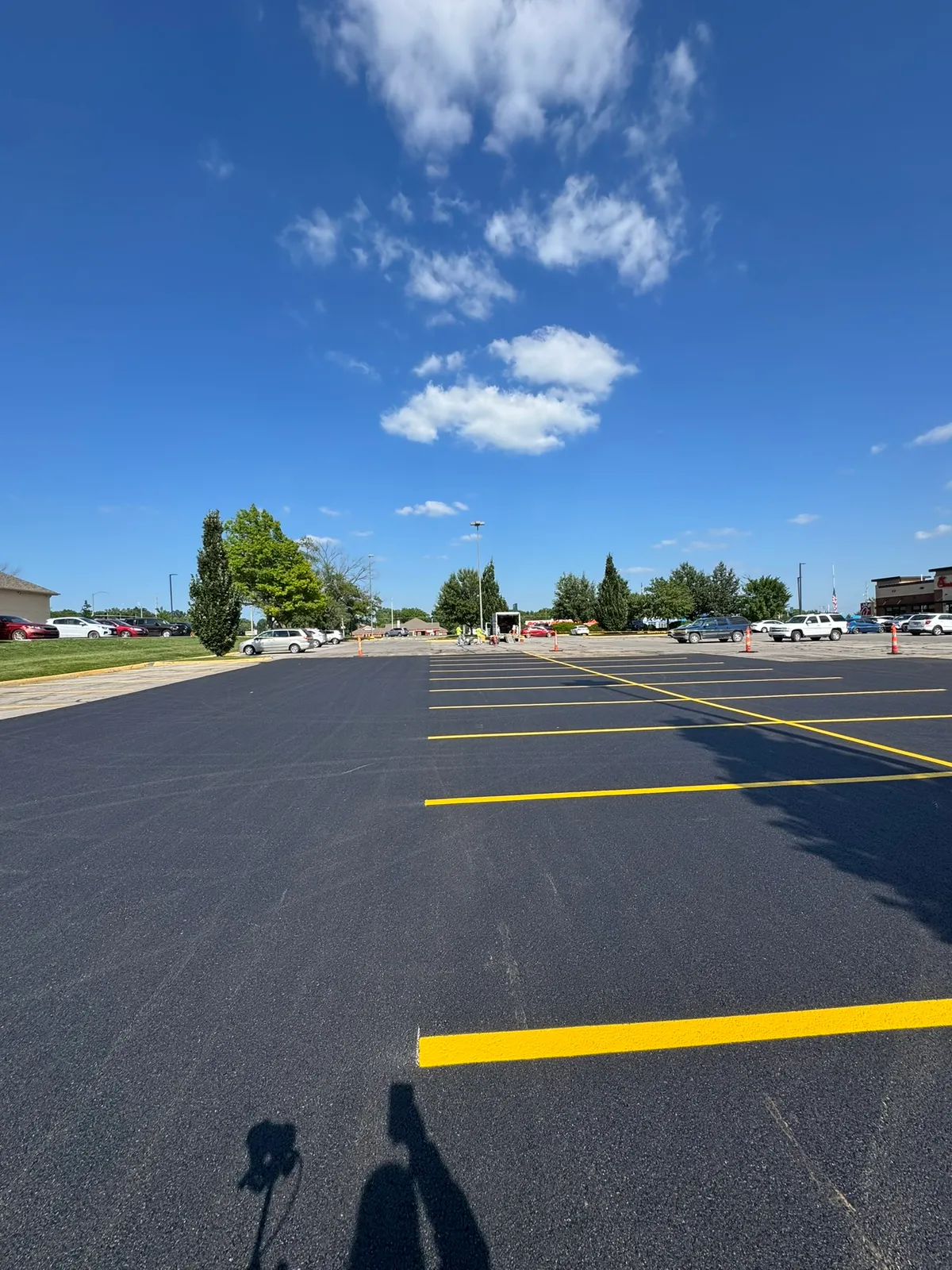
Commercial Sealcoating — Frequently Asked Questions
How long do I need to keep customers off newly sealcoated areas?
Your parking lot needs 24-48 hours before allowing vehicle traffic, depending on temperature and humidity. During Kansas City's humid summers, allow the full 48 hours for proper curing. Foot traffic can typically resume after 4-6 hours. We use fast-dry additives that can reduce vehicle closure to 12-18 hours for critical areas like drive-thrus or emergency lanes. Hot, dry conditions above 75°F accelerate curing, while temperatures below 65°F or humidity above 50% extend drying time. Heavy vehicles like delivery trucks should wait an additional 24 hours beyond passenger car reopening. Line striping happens after sealcoat fully cures, adding another 2-4 hours of drying time for paint.
Will sealcoating fill the cracks in my parking lot?
Sealcoating fills hairline cracks up to 1/8 inch wide, but larger cracks require separate treatment before sealcoating. Cracks between 1/8 and 1/2 inch need hot rubberized crack filler, while anything wider requires routing and sealing or possible saw-cutting and patching. The freeze-thaw cycles common to Kansas City make proper crack sealing critical—water entering unsealed cracks expands when freezing, widening cracks by 20-30% each winter. Our crews identify and measure all cracks during initial inspection, recommending appropriate repairs. Attempting to sealcoat over untreated cracks larger than 1/8 inch wastes material and provides no protection, as the coating can't bridge these gaps effectively.
How often should retail shopping centers reseal their parking lots?
Retail centers should sealcoat every 3-4 years, with high-traffic areas like entrances and drive lanes potentially needing attention every 2-3 years. Properties along busy corridors like Metcalf or Noland Road see accelerated wear from turning vehicles and require more frequent applications. The constant traffic, shopping cart abrasion, and delivery truck patterns create uneven wear requiring strategic maintenance. Winter de-icing salts used heavily in Johnson County accelerate deterioration, while Jackson County's clay soil movement stresses pavement differently. Annual inspections help identify wear patterns specific to your property. Big-box stores with garden centers face additional challenges from mulch, soil, and fertilizer spills that break down sealcoat faster than typical retail traffic.
What happens if it rains right after sealcoating application?
Rain within 24 hours of application washes away uncured sealcoat, requiring complete reapplication of affected areas. Even light drizzle during the first 8 hours causes coating failure, creating an uneven, blotchy surface that won't protect your asphalt. Kansas City's unpredictable spring weather makes timing critical—we monitor hourly forecasts and won't start projects with any precipitation chance within 24 hours. If unexpected rain occurs, we return to assess damage and reapply compromised sections at no additional charge. Proper sealcoat needs temperatures above 50°F during application and for 48 hours afterward. Morning dew can also affect curing, which is why we typically start applications after 9 AM when surfaces are completely dry.
Is sealcoating worth it for older parking lots with existing damage?
Sealcoating extends the life of older lots by 3-5 years when combined with proper repairs, often delaying expensive replacement. Lots with stable alligator cracking, surface raveling, or minor settling benefit significantly from sealcoating after addressing structural issues. The process stops further UV degradation and water infiltration that accelerates deterioration. However, lots with base failure, major upheaval from tree roots, or extensive sub-grade problems need reconstruction rather than surface treatments. Properties built on Kansas City's expansive clay soils before modern construction standards often show differential settling that sealcoating can't fix. Our inspection process identifies whether your lot's condition warrants sealcoating investment or if replacement provides better long-term value. Many 15-20 year old lots respond well to crack sealing, patching, and sealcoating, buying valuable time before major capital expenses.
Trusted Across the KC Metro
Ready to move forward?
One crew installs it, maintains it, and keeps it compliant — no subcontractors. Call (913) 701-6044 or send the form.
KC Metro Cities Where We Provide Commercial Sealcoating
Commercial Sealcoating — One Call Handles It
One call handles it all — from the first estimate to the final walkthrough. Platinum Paving has completed 4,000+ projects across the KC metro. Every job comes with our 1-year warranty.