ADA Parking Lot Compliance in Kansas City — Ramps, Signage, and Striping
Complete ADA parking lot compliance from ramps to signage, protecting your business from liability.
Get your free ADA Ramps, Signage & Compliance estimate
Tell us about your property and we'll take a look — you'll hear back within 24 hours, or call (913) 701-6044 now.
- Free estimate, no obligation
- Response within 24 hours
- 1-year warranty on all work
- Owner-led — no subcontractors
What ADA Compliance Covers for Commercial Parking Lots
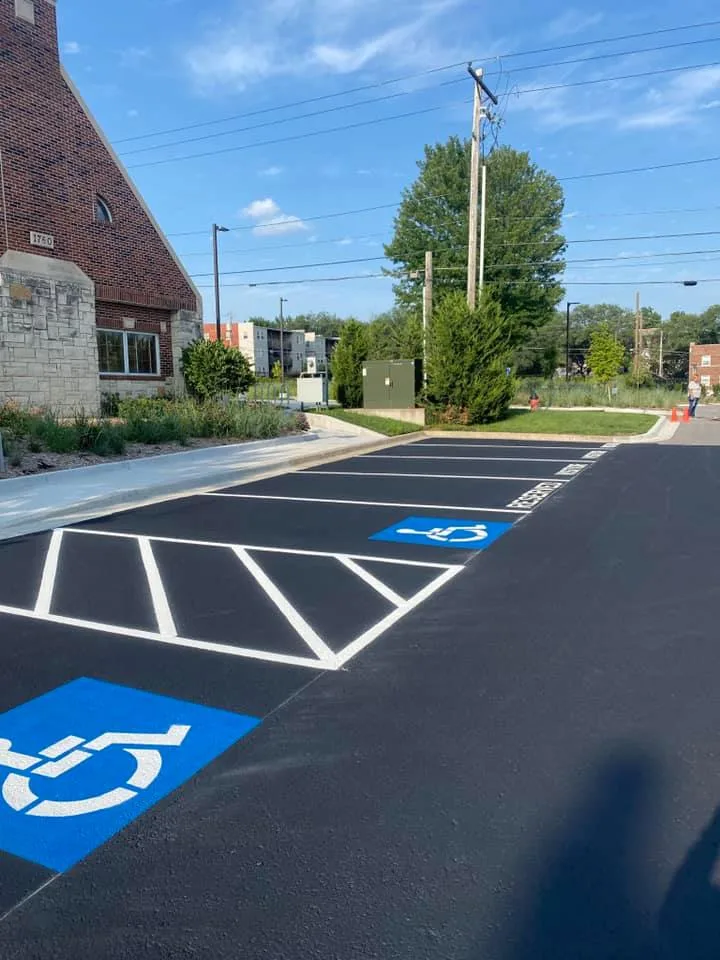
ADA compliance for parking lots means meeting federal accessibility standards set by the ADA Accessibility Guidelines (ADAAG). This includes proper van-accessible spaces with 8-foot wide access aisles, standard accessible spaces with 5-foot aisles, and compliant ramps with detectable warning surfaces. Every element must meet specific measurements - from the 2% maximum cross slope on parking spaces to the 5% running slope on accessible routes. Beyond just striping, true compliance requires MUTCD signage at proper heights, truncated dome surfaces at pedestrian crossings, and smooth transitions between parking surfaces and sidewalks. With federal fines starting at $75,000 for first violations, Kansas City property owners can't afford to guess. Our crews use digital smart levels to verify every slope measurement and document compliance for your records.
How Kansas City's Freeze-thaw Cycles Affect ADA Ramps
Kansas City's 100+ annual freeze-thaw cycles create unique challenges for maintaining ADA-compliant surfaces. Water infiltrates concrete joints and asphalt cracks, then expands when temperatures drop below freezing - common from November through March in our Zone 6a-6b climate. This constant expansion and contraction causes ramp surfaces to heave, creating lips that exceed the quarter-inch maximum height differential allowed by ADAAG standards. Our heavy clay soils, particularly in Jackson County, compound the problem by retaining moisture and shifting seasonally. Properly installed ADA ramps require reinforced concrete with fiber mesh, sealed control joints, and compacted aggregate base extending 12 inches beyond the ramp footprint. For detectable warning surfaces, we use cast-in-place truncated domes or surface-applied panels rated for Midwest weather extremes - not the cheap stick-on products that delaminate after one winter.
Being ADA Compliant vs Just Having Handicap Parking
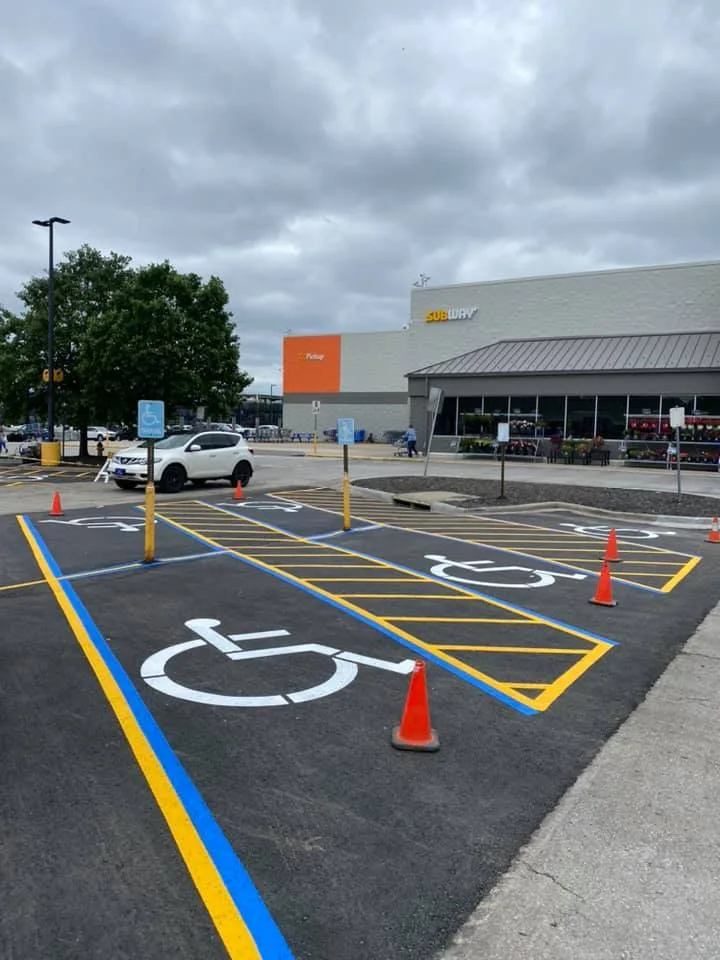
Having a few blue parking spaces doesn't mean you're ADA compliant. True compliance requires an interconnected system where every element works together. Accessible parking spaces must connect to building entrances via accessible routes with maximum 5% running slopes and 2% cross slopes. Van-accessible spaces need 96-inch wide access aisles plus 12 feet of vertical clearance. Standard accessible spaces require 60-inch aisles. MUTCD-compliant signage must be mounted 60 inches minimum above ground, displaying the proper ISA symbol. Curb ramps need detectable warning surfaces 24 inches deep with truncated domes spaced precisely 2.35 inches apart. Even your standard parking spaces affect compliance - if they're on slopes exceeding 2%, they don't count toward your required accessible space calculations. We verify every measurement against current ADAAG standards, not outdated local codes.
Kansas City Businesses That Need ADA Compliance Upgrades
Medical facilities across Johnson County face the strictest scrutiny, requiring higher ratios of accessible spaces and patient drop-off zones with level landing areas. Retail centers along 119th Street or Independence Center need compliant routes from every parking area to all public entrances. Office complexes in Crown Center and the Plaza require employee parking areas to meet the same standards as customer lots. Multi-family properties must provide accessible routes to amenities like mail kiosks and dumpster enclosures. Industrial facilities in the West Bottoms still need compliant visitor parking and accessible paths to main offices. Even churches and private schools fall under ADA requirements for their parking facilities. With recent DOJ enforcement actions targeting Kansas City properties, every commercial lot needs evaluation - from strip centers in Raytown to distribution centers near KCI Airport.
Need ADA Ramps, Signage & Compliance for Your Property?
Get a free estimate from the crew that has completed 4,000+ projects across the KC metro. No pressure, no obligation.
ADA Retrofit: From Lot Survey to Compliant Parking
What happens after you call your Kansas City paving contractor — from first inspection to final walkthrough.
We inspect your lot, identify every issue, and provide a detailed estimate — no cost, no pressure.
We design the scope of work around your business hours so your operations aren't disrupted.
Old asphalt is milled down, debris cleared, and the base is prepared for a clean bond.
Fresh hot-mix asphalt is laid to spec and rolled to precise compaction with commercial-grade equipment.
Parking spaces, fire lanes, ADA markings, and signage — your lot is fully compliant and looks brand new.
We walk the finished project with you. If anything isn't right, we make it right before we leave.
Signs Your Property Needs ADA Ramps, Signage & Compliance
Cracked Ramp Surfaces
Cracks wider than 1/4 inch create trip hazards that violate ADA standards
Missing Warning Surfaces
Ramps without truncated dome surfaces fail current ADAAG requirements for detectability
Faded Blue Paint
Accessible space markings must maintain clear visibility and proper ISA symbol definition
Steep Access Routes
Walkways exceeding 5% slope require handrails or complete regrading for compliance
ADA Compliance Work — Cost Factors
Existing conditions drive most compliance costs. Lots with slopes exceeding 5% require significant regrading or ramped walkways instead of simple curb cuts. The number of non-compliant spaces affects project scope - bringing 50 spaces into compliance costs more than fixing 10. Drainage modifications add complexity when regrading changes water flow patterns. Material choices impact pricing: cast-in-place truncated dome surfaces cost more than surface-applied panels but last longer in Kansas City weather. Demolition needs vary - removing old non-compliant ramps takes more effort than starting fresh. Striping alone runs less than full reconstruction, but often existing asphalt needs milling to achieve proper slopes. Rush compliance projects responding to ADA lawsuits or complaints require overtime crews and expedited materials, increasing costs versus planned upgrades during regular paving seasons.
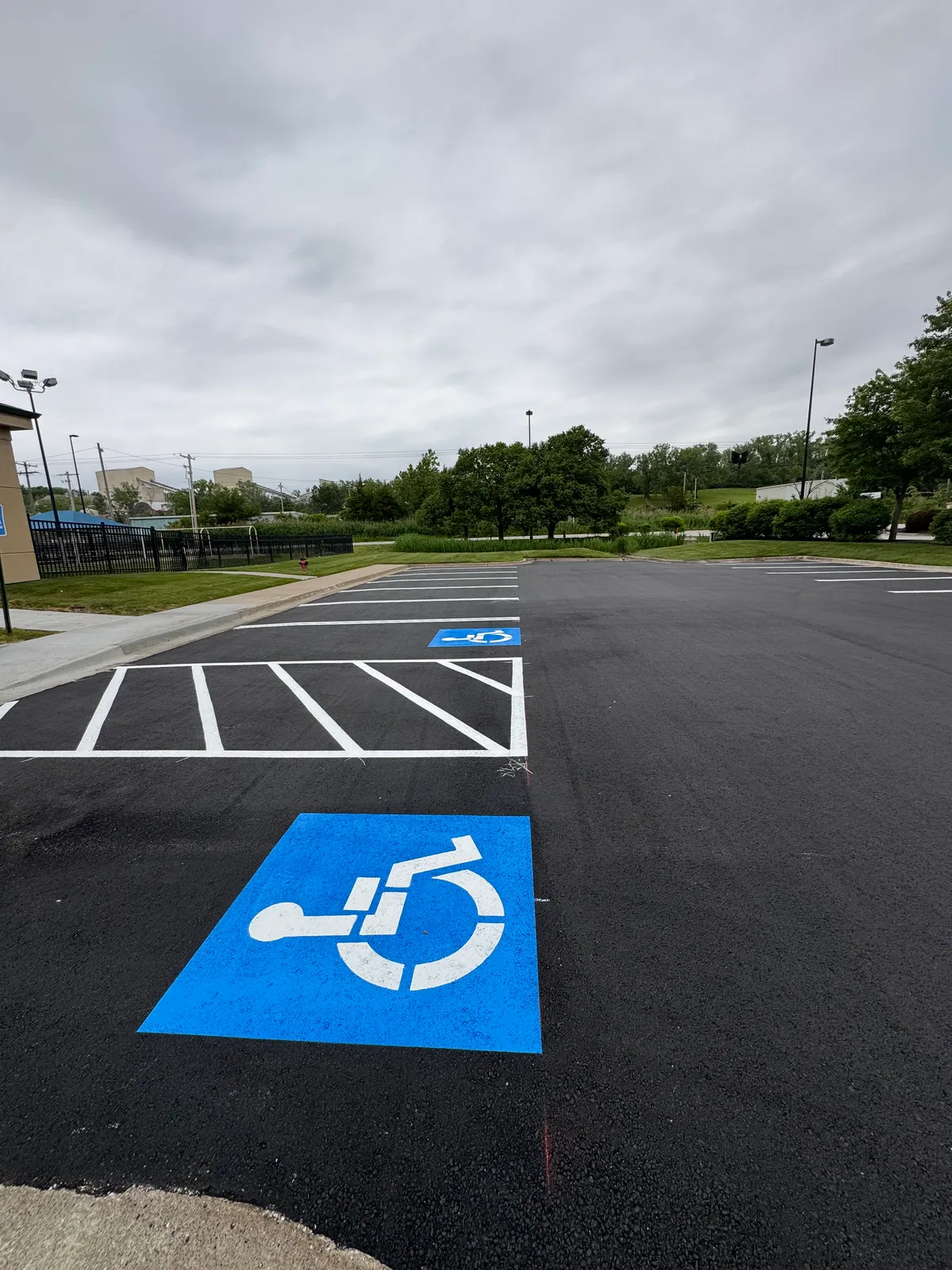
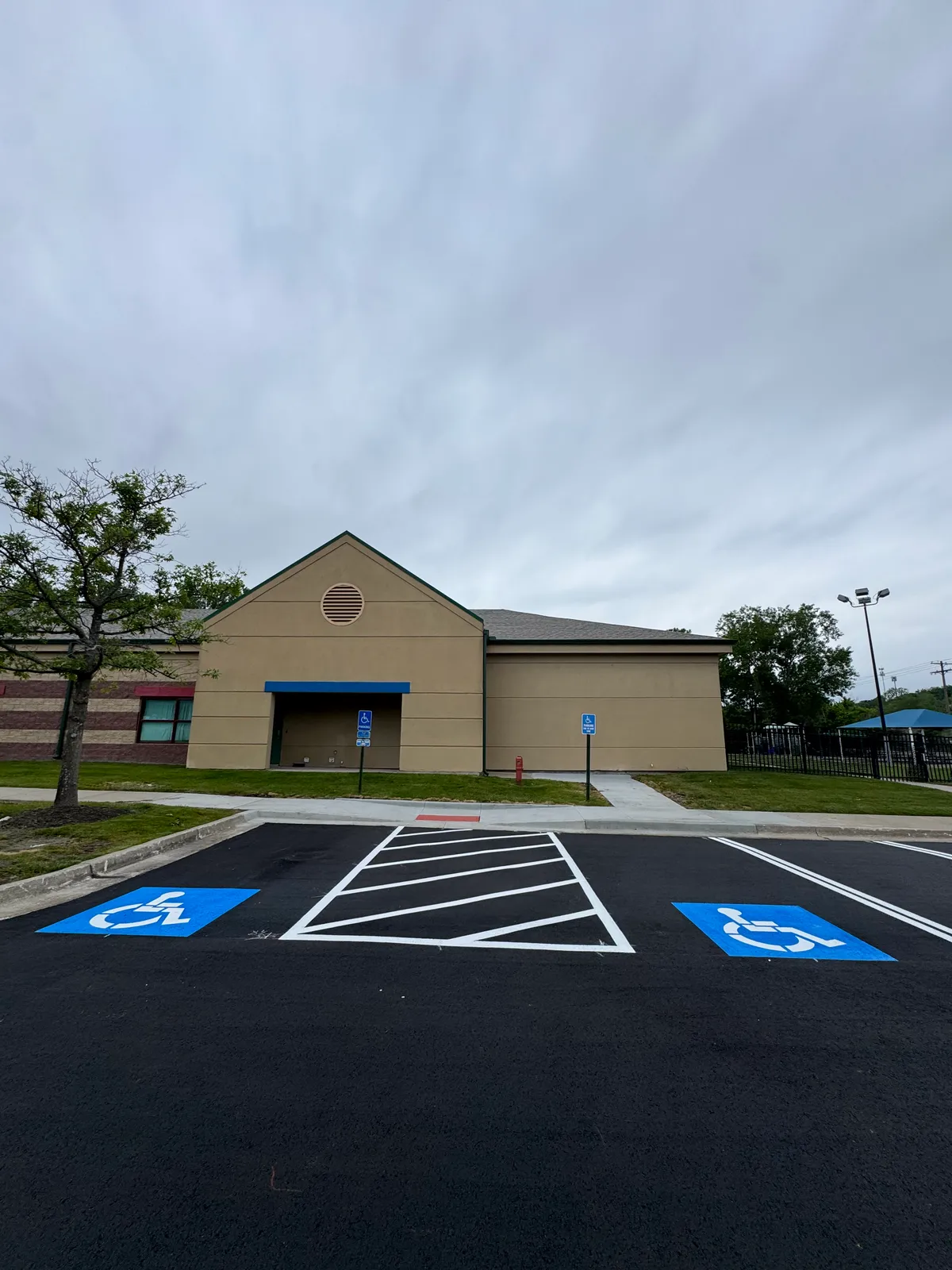
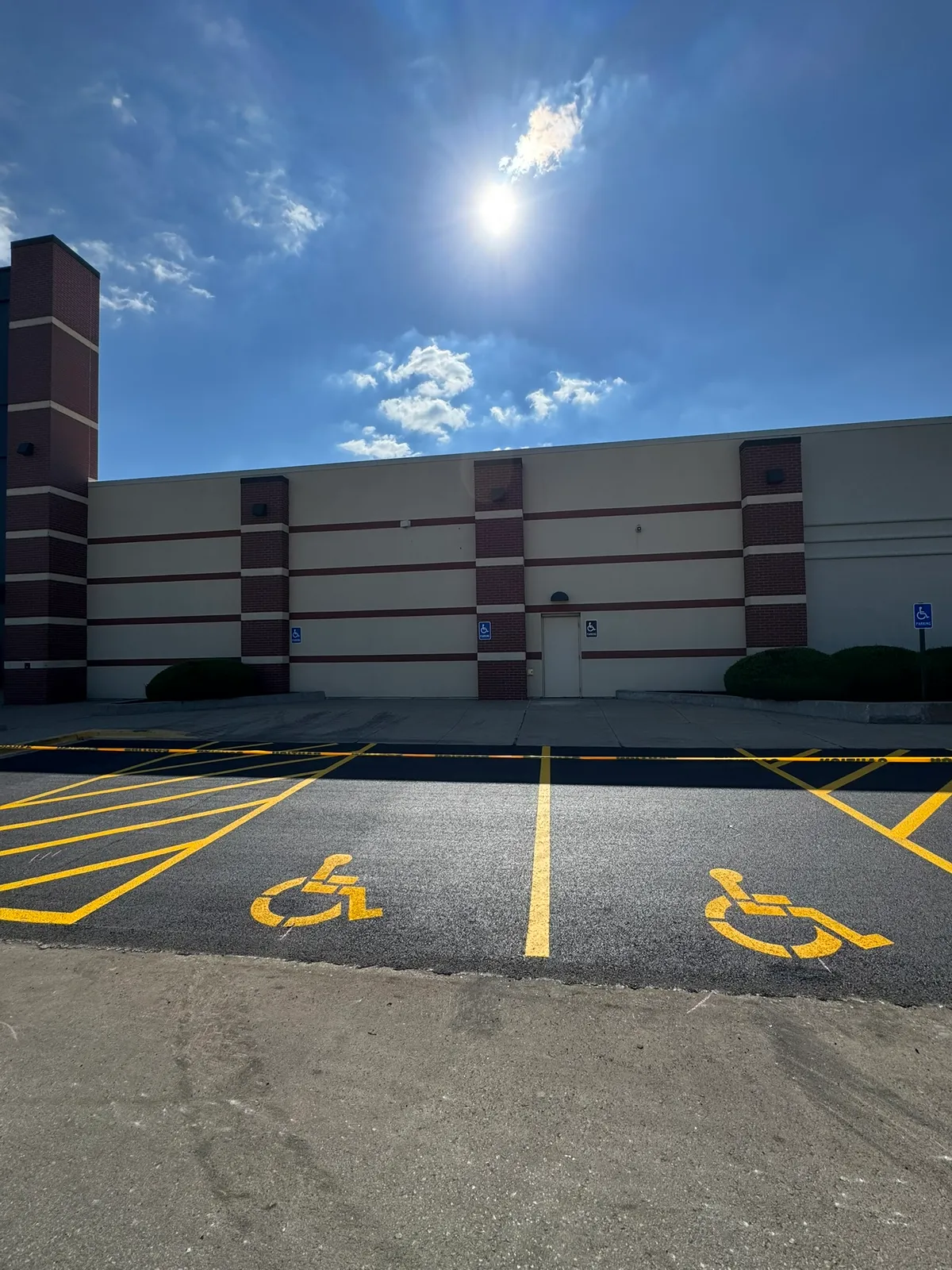
Get a Free Estimate — (913) 701-6044Recent ADA Ramps, Signage & Compliance Projects
ADA Ramps, Signage & Compliance — Frequently Asked Questions
How many accessible parking spaces does my Kansas City business actually need?
The ADA requires specific ratios based on total parking count. For lots with 1-25 spaces, you need 1 accessible space. At 26-50 spaces, you need 2. Up to 100 spaces requires 4, with 1 being van-accessible. Larger lots need 1 accessible space per 25 parking spots. Medical facilities require 10% of patient/visitor spaces to be accessible. These aren't suggestions - they're federal requirements enforced through lawsuits and DOJ actions. Every accessible space must be closest to the accessible entrance it serves, not just scattered randomly through your lot.
Can we just repaint our existing handicap spaces to meet ADA requirements?
Rarely. Most older parking lots fail current slope requirements. ADA standards mandate maximum 2% slope in all directions for accessible spaces and access aisles. Standard parking on steeper slopes doesn't count. Your 20-year-old lot likely lacks proper width - van spaces need 8-foot aisles, standard accessible spaces need 5-foot aisles. Old ramps probably lack detectable warning surfaces with truncated domes. Signage height and placement changed too. We measure every existing element with digital levels and ADA compliance tools. About 80% of pre-2010 lots need physical modifications beyond paint.
What happens if someone files an ADA complaint against our property?
ADA complaints trigger immediate problems. The Department of Justice can issue fines starting at $75,000 for first violations, $150,000 for subsequent ones. Private lawsuits seek damages plus attorney fees - often exceeding $100,000 total. You'll receive a demand letter listing specific violations with deadlines for correction. Emergency compliance work costs more than planned upgrades since you're working under court deadlines. Your property stays on federal watch lists for future inspections. Insurance rarely covers ADA non-compliance penalties. We've helped Kansas City properties respond to DOJ actions by providing certified measurements, engineered correction plans, and rapid installation within court-ordered timeframes.
Do Kansas City weather conditions require special ADA materials or methods?
Absolutely. Standard ADA products fail in Kansas City's climate extremes. Truncated dome surfaces must withstand 100+ degree summer heat and subzero winters. We use polymer-composite detectable warning surfaces rated for 50-year service in freeze-thaw conditions. Concrete ramps require 4,500 PSI mix with fiber reinforcement to prevent winter cracking. Joint sealants need hot-pour rubberized products that flex with temperature swings. Surface coatings must resist snow melt chemicals used throughout metro area. Even striping paint requires methyl methacrylate formulations that bond properly when applied during our narrow spring and fall temperature windows. Cheaper materials mean redoing work within 2-3 years.
How long does a typical ADA compliance project take for a commercial lot?
Timeline depends on scope. Simple restriping with minor ramp modifications takes 3-5 days for most commercial lots. Full reconstruction of non-compliant accessible routes requires 2-3 weeks. We phase work to maintain business operations - completing one section before moving to the next. Concrete ramps need 7-day cure time before accepting traffic. Weather affects scheduling from March through November construction season. Truncated dome installation adds 1-2 days. MUTCD signage arrives within 5 business days from Kansas City suppliers. Permit approvals from local jurisdictions typically take 5-10 business days. We coordinate inspections throughout the project to avoid delays. Most properties never need full closure.
Trusted Across the KC Metro
Ready to move forward?
One crew installs it, maintains it, and keeps it compliant — no subcontractors. Call (913) 701-6044 or send the form.
KC Metro Cities Where We Provide ADA Ramps, Signage & Compliance
ADA Ramps, Signage & Compliance — One Call Handles It
One call handles it all — from the first estimate to the final walkthrough. Platinum Paving has completed 4,000+ projects across the KC metro. Every job comes with our 1-year warranty.