Concrete Repair Services in Kansas City — Slabs, Joints, and Surfaces
Fix damaged concrete before liability issues and complete replacement costs hit your bottom line.
Get your free Concrete Repair estimate
Tell us about your property and we'll take a look — you'll hear back within 24 hours, or call (913) 701-6044 now.
- Free estimate, no obligation
- Response within 24 hours
- 1-year warranty on all work
- Owner-led — no subcontractors
Concrete Patching vs Full Replacement
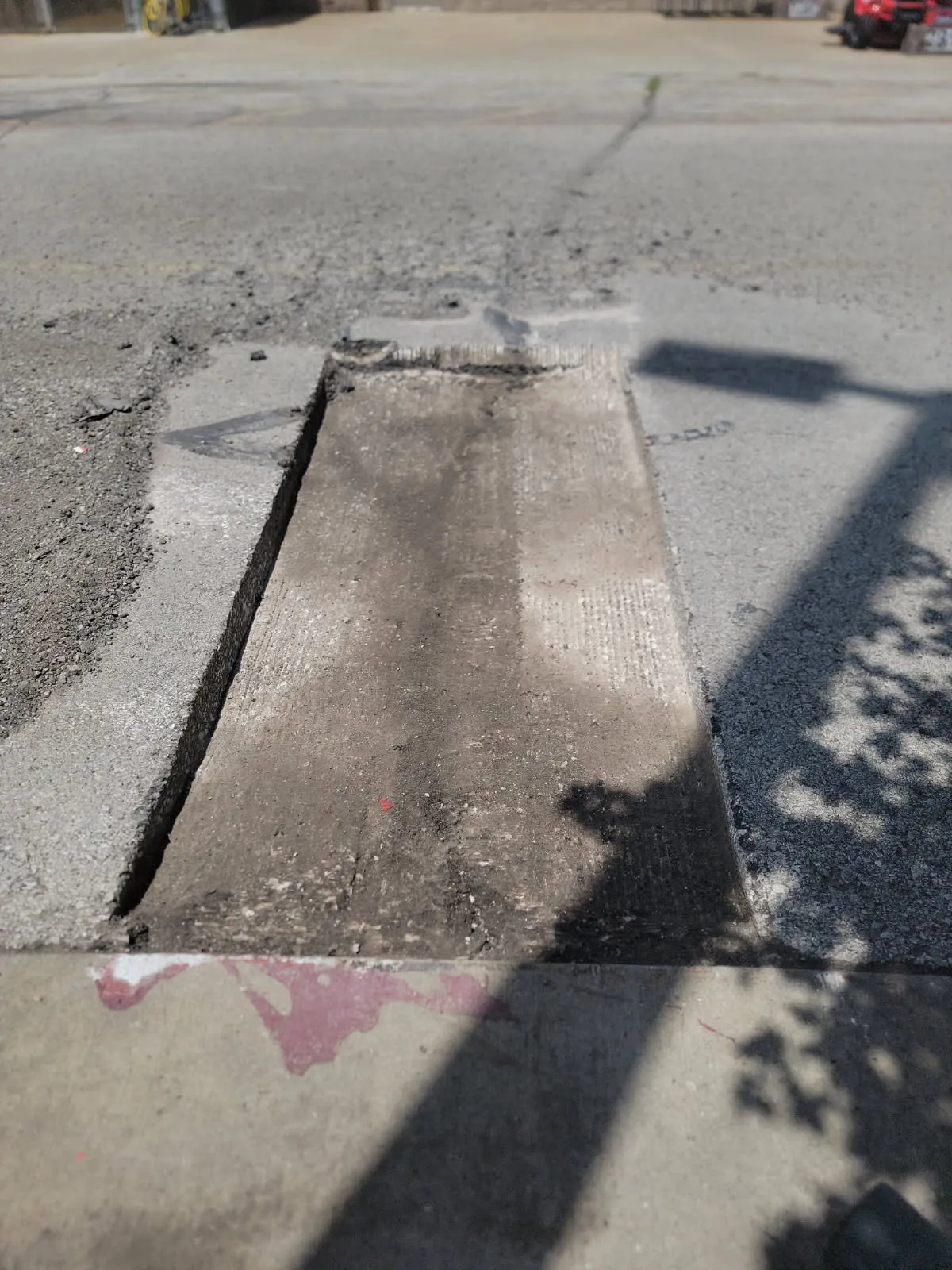
Concrete patching works when damage affects less than 25% of a slab and hasn't compromised the structural integrity. We remove deteriorated concrete down to sound material, typically 2-4 inches for partial-depth repair or through the entire slab thickness for full-depth repair. Small spalling areas under 2 square feet get polymer-modified patching compound. Larger sections need standard concrete mix with proper dowel bar installation to tie into existing slabs. Full replacement becomes necessary when D-cracking patterns cover more than half the surface, when slabs have settled beyond 2 inches, or when the subgrade has failed. Kansas City's 100+ annual freeze-thaw cycles make proper assessment critical - water trapped in cracks expands up to 9% when freezing, accelerating deterioration. Our crew uses ground-penetrating radar to check slab thickness and identify voids beneath the surface. Most commercial lots have 6-8 inch thick concrete that can handle multiple repair cycles if caught early. Careful removal is half the job on any concrete repair — taking out the failed material without wrecking what's around it. At Prairie Band Casino & Resort in Mayetta, that meant controlled demolition of the deteriorated entrance logo pavers, extracting each unit without disturbing the adjacent hardscape or the base beneath, before we reset the replacements — the full project shows the removal and replacement.
How Long Commercial Concrete Repairs Actually Last
Properly executed concrete repairs last 5-15 years depending on traffic loads and maintenance. Partial-depth repairs in low-traffic areas like sidewalks typically hit the 10-15 year mark. High-stress zones near dumpster pads and loading docks need attention every 5-7 years due to constant heavy vehicle impact. The key is matching repair materials to existing concrete strength - we test cores to verify PSI ratings, usually finding 3,500-4,500 PSI in commercial slabs. Temperature matters too. Repairs performed when ambient temperatures stay between 50-85°F cure properly. Kansas City's wild spring temperature swings mean we monitor forecasts closely and sometimes tent repairs with insulated blankets. Epoxy injection for non-structural cracks provides the longest-lasting fix, creating bonds stronger than the surrounding concrete. We've tracked repairs from 2015 still performing well at properties along I-435. Regular sealing every 2-3 years extends any repair's lifespan by preventing moisture infiltration. Properties that skip sealing see repair failure rates triple.
When Concrete Repairs Make More Sense Than Full Replacement
Repair immediately when you spot scaling deeper than 1/8 inch, spalling around joints, or map cracking patterns spreading beyond isolated areas. These early-stage problems cost 10-20% of full replacement when addressed quickly. Waiting transforms a $2,000 sidewalk repair into a $10,000 replacement project. Trip hazards measuring 1/4 inch or greater need immediate attention for ADA compliance - federal guidelines don't offer grace periods. Popouts from reactive aggregate look minor but indicate moisture problems that worsen exponentially. Loading dock edges showing corner breaks compromise forklift safety and damage equipment. Our 30-person crew handles emergency repairs within 48 hours to prevent liability claims. Kansas City's heavy clay soils shift seasonally, making spring inspections essential. Properties near the Missouri River see more movement due to expansive soils. Document conditions with photos and measurements - insurance companies often cover repairs from specific incidents but not gradual deterioration. Schedule repairs April through October for best curing conditions and contractor availability.
Where Commercial Properties Need Concrete Repair Most
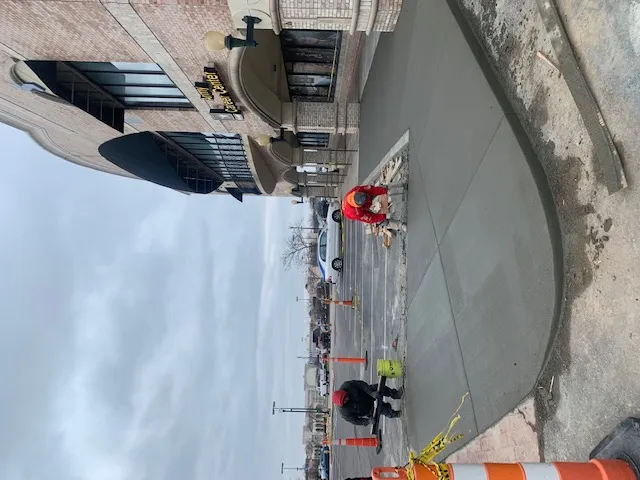
Distribution centers see heaviest damage at dock leveler pits where constant truck impact creates spalling along edges. Manufacturing facilities deal with chemical exposure causing surface scaling, particularly around wash bays and chemical storage. Retail centers need sidewalk repairs for ADA compliance - even 1/4 inch lips create trip hazards and liability exposure. Office complexes focus on entrance areas where freeze-thaw cycles and deicing salts accelerate map cracking. Multi-family properties battle garage deck deterioration from road salt tracked in by vehicles. Medical facilities can't tolerate any tripping hazards near patient drop-off zones. Schools and universities need playground and walkway repairs completed during summer breaks. Industrial parks see joint failure where heavy trucks turn, requiring full-depth repair with proper load transfer dowel bar installation. Each scenario demands different repair strategies based on load requirements and safety regulations.
Need Concrete Repair for Your Property?
Get a free estimate from the crew that has completed 4,000+ projects across the KC metro. No pressure, no obligation.
Concrete Repair: Sawcut, Remove, Pour, Cure
What happens after you call your Kansas City paving contractor — from first inspection to final walkthrough.
We inspect your lot, identify every issue, and provide a detailed estimate — no cost, no pressure.
We design the scope of work around your business hours so your operations aren't disrupted.
Old asphalt is milled down, debris cleared, and the base is prepared for a clean bond.
Fresh hot-mix asphalt is laid to spec and rolled to precise compaction with commercial-grade equipment.
Parking spaces, fire lanes, ADA markings, and signage — your lot is fully compliant and looks brand new.
We walk the finished project with you. If anything isn't right, we make it right before we leave.
Signs Your Property Needs Concrete Repair
Surface Scaling
Flaking concrete surface, especially after winter deicing salt application
Joint Separation
Gaps wider than 1/2 inch between slabs indicating movement or settlement
Corner Breaks
Triangular cracks from slab corners, common at loading dock edges
D-Cracking Patterns
Parallel cracks near joints caused by freeze-thaw deterioration in aggregate
What Determines Concrete Repair Pricing
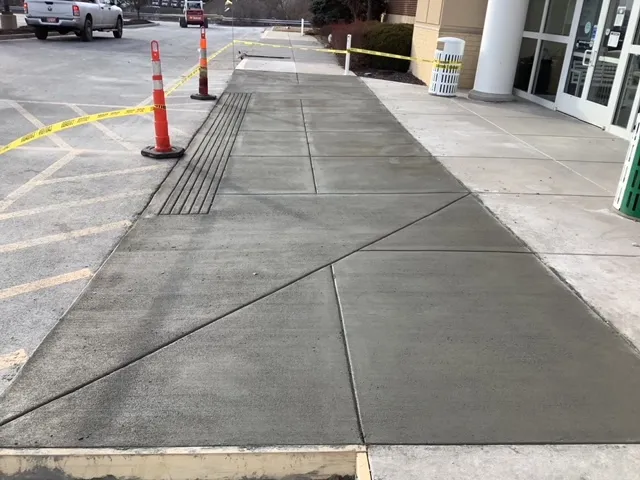
Repair depth drives material costs - partial-depth repair uses 40-60 pounds of material per square foot while full-depth repair requires 150 pounds per cubic foot. Accessibility impacts labor hours significantly. Open parking areas allow equipment efficiency, while tight spaces between buildings require hand tools and wheelbarrows. Structural repairs with dowel bar retrofitting or epoxy injection systems cost more due to specialized equipment and materials. Mobilization charges apply for small repairs under 100 square feet since crews and equipment deploy regardless of project size. Weekend or overnight work for businesses that can't disrupt operations adds 25-50% in labor premiums. Concrete strength requirements affect mix design costs - high-PSI mixes for loading docks cost more than standard sidewalk concrete. Removal and disposal fees vary by thickness and reinforcement. Kansas City landfills charge by weight, making thick slab removal expensive.
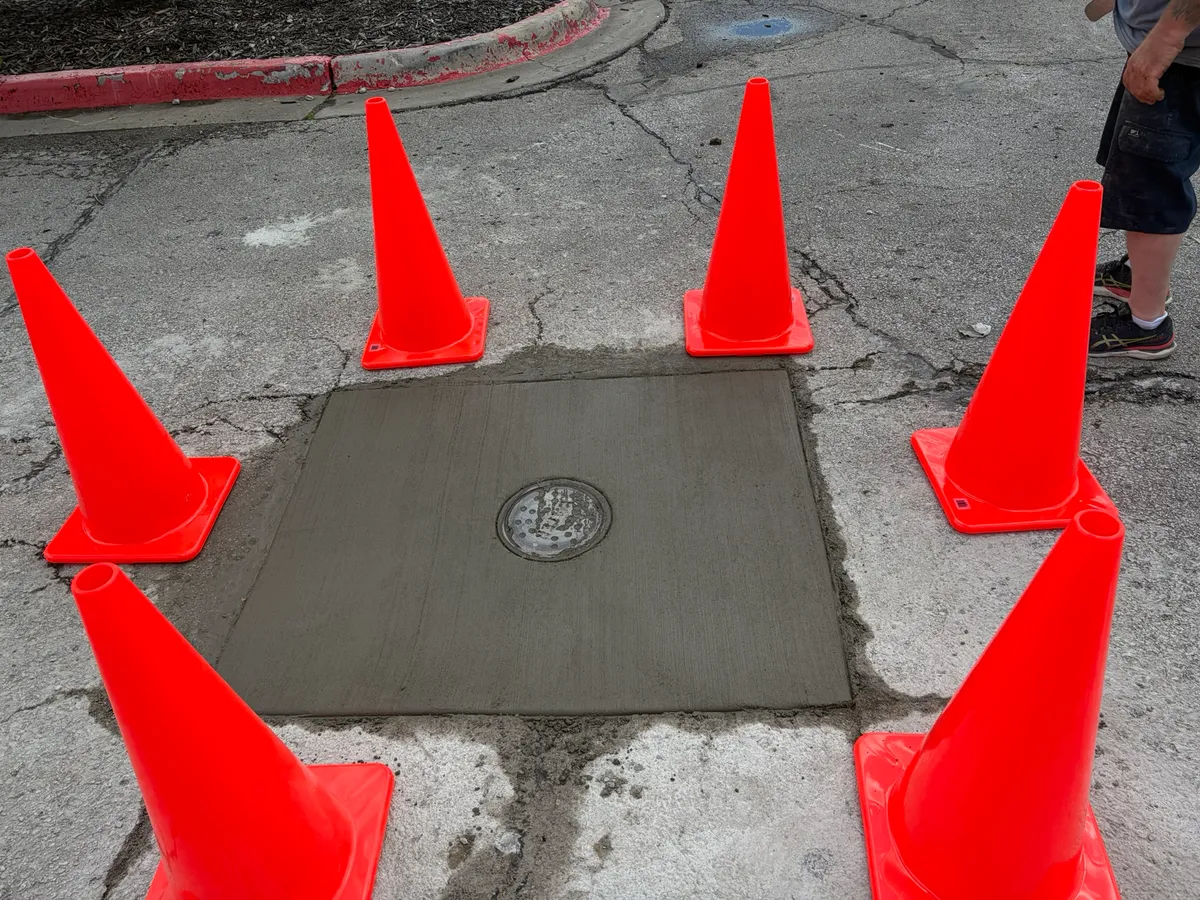
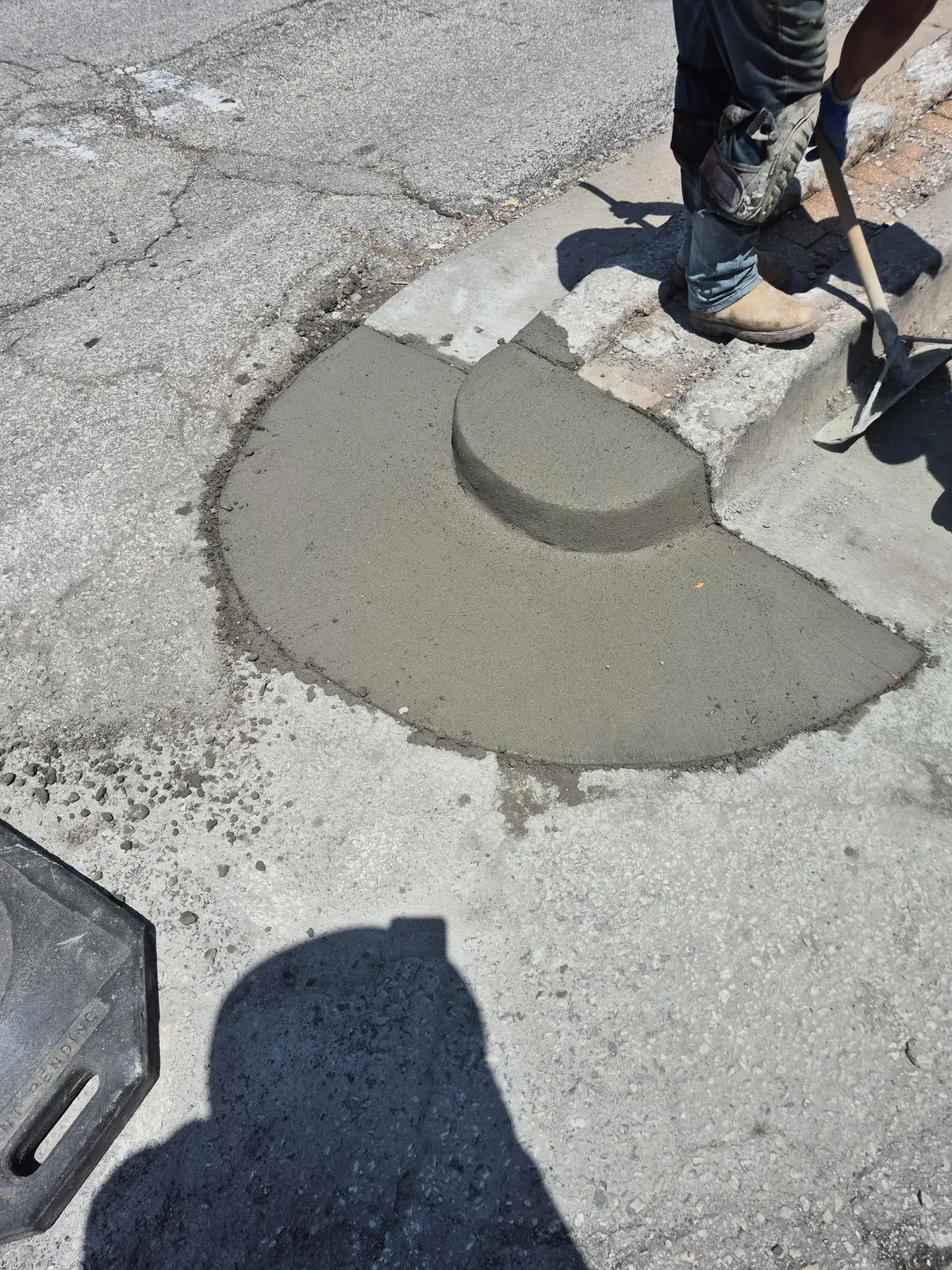
Get a Free Estimate — (913) 701-6044Recent Concrete Repair Projects
Concrete Repair — Frequently Asked Questions
How can I tell if concrete damage is just cosmetic or actually structural?
Cosmetic damage stays surface-level - hairline cracks under 1/8 inch wide, minor scaling, or small popouts. Structural issues show deeper symptoms: cracks wider than 1/4 inch, vertical displacement between slabs, or spalling that exposes rebar. We test with chain dragging to detect hollow sounds indicating delamination. Structural damage often appears at joints first, where load transfer fails. If cracks run diagonally across corners or show rust staining from corroding rebar, that's structural. Movement is another indicator - mark crack width with pencil and check monthly. Growing cracks signal active structural problems requiring immediate professional assessment.
What's the typical timeline for completing concrete repairs at an active business?
Standard repairs take 2-5 days from start to traffic-ready. Day one involves saw-cutting perimeters and removing damaged concrete. Day two covers subgrade prep and forming if needed. Day three is pour day - we place new concrete by 10 AM for optimal curing. High-early strength mixes allow light foot traffic after 24 hours and vehicle traffic after 72 hours in ideal conditions. Kansas City's variable weather can extend timelines. We coordinate with property managers to minimize disruption, often working in phases to maintain access routes. Emergency repairs using rapid-set materials open to traffic in 4-6 hours but cost significantly more than standard concrete.
Should I repair concrete problems separately or bundle them into one project?
Bundling saves 15-30% on total costs through reduced mobilization fees and material delivery charges. One concrete truck delivers more efficiently than multiple small pours. Labor efficiency improves when crews stay on-site rather than loading equipment multiple times. However, budget constraints sometimes necessitate phasing. Prioritize trip hazards and ADA compliance issues first, then structural repairs at loading areas, finally cosmetic improvements. We map all concrete defects during inspection, creating repair priority lists. Many property managers budget annual concrete maintenance, addressing highest-priority sections each year. This approach spreads costs while preventing minor issues from becoming major failures.
How do harsh KC winters affect concrete repair scheduling and success?
Concrete repair season runs April through October for best results. Kansas City's freeze-thaw cycles make winter repairs risky - new concrete needs 28 days above freezing to reach full strength. We monitor ground temperature, not just air temperature. Frozen subgrade causes settlement when spring thaw arrives. Emergency winter repairs require heated enclosures, insulation blankets, and accelerating admixtures that triple material costs. Smart property managers inspect in March, schedule repairs for May-June, allowing completion before peak summer heat. Repairs performed above 90°F require special curing procedures. September-October offers ideal conditions with moderate temperatures and lower precipitation chances than spring.
What's the difference between epoxy injection and traditional patching for cracks?
Epoxy injection bonds crack faces at molecular level, creating repairs stronger than surrounding concrete. Best for non-moving cracks in structurally sound slabs. We drill ports every 6-12 inches along cracks, inject two-part epoxy under pressure until material flows from adjacent ports. Cures fully in 24-48 hours depending on temperature. Traditional patching involves routing cracks open to 1/4 inch minimum width, filling with flexible sealant or rigid patching compound. Works better for active cracks that continue moving with temperature changes. Epoxy injection costs more initially but lasts longer for stable cracks. Moving cracks need flexible materials that accommodate seasonal movement without re-cracking.
Trusted Across the KC Metro
Ready to move forward?
One crew installs it, maintains it, and keeps it compliant — no subcontractors. Call (913) 701-6044 or send the form.
KC Metro Cities Where We Provide Concrete Repair
Concrete Repair — One Call Handles It
One call handles it all — from the first estimate to the final walkthrough. Platinum Paving has completed 4,000+ projects across the KC metro. Every job comes with our 1-year warranty.