Asphalt Resurfacing and Overlay Services in Kansas City
Extend your pavement life 15–20 years with a professionally installed hot-mix asphalt overlay.
Get your free Asphalt Overlays estimate
Tell us about your property and we'll take a look — you'll hear back within 24 hours, or call (913) 701-6044 now.
- Free estimate, no obligation
- Response within 24 hours
- 1-year warranty on all work
- Owner-led — no subcontractors
What an Asphalt Overlay Is and When You Need One
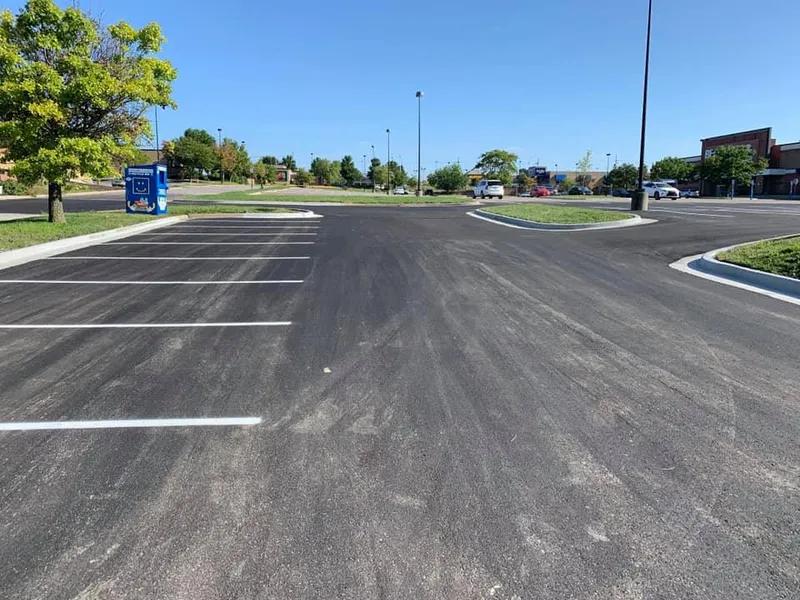
An asphalt overlay is a new layer of hot-mix asphalt (HMA) applied directly over your existing pavement, typically 1.5 to 3 inches thick. Unlike seal coating which just protects the surface, an overlay adds structural strength to your parking lot. You need an overlay when your pavement shows widespread cracking, minor rutting, or surface deterioration but the base layer remains stable. After milling the existing surface to ensure proper bonding, we apply a tack coat adhesive, then lay the new HMA at 275-325°F using our paver screed equipment. The overlay process costs about 30-50% less than full replacement while adding 15-20 years to your pavement's service life. Here in Kansas City's freeze-thaw climate with 100+ cycles per winter, overlays work best on lots that are 7-15 years old showing moderate wear but no major base failures.
How Long the Overlay Process Takes for a Typical Commercial Lot
Most commercial parking lot overlays take 2-4 days from start to finish, depending on size and complexity. Day one involves milling the existing surface with our cold planer to remove 1-2 inches of deteriorated asphalt and create a uniform bonding surface. We'll also repair any isolated base failures and adjust drainage structures to match the new surface elevation. Day two starts with applying the tack coat, followed immediately by laying the new HMA while maintaining proper mat temperature. Our 30-person crew can typically pave 15,000-20,000 square feet per day, with multiple rollers achieving target compaction rates of 92-96% density. The final day includes striping and any necessary signage installation. Kansas City's asphalt plants (Hunt Midwest, Ideker, APAC) keep us supplied with consistent mix designs, and we schedule overlays between April and November when temperatures stay above 50°F for proper compaction.
An Overlay vs Complete Reconstruction
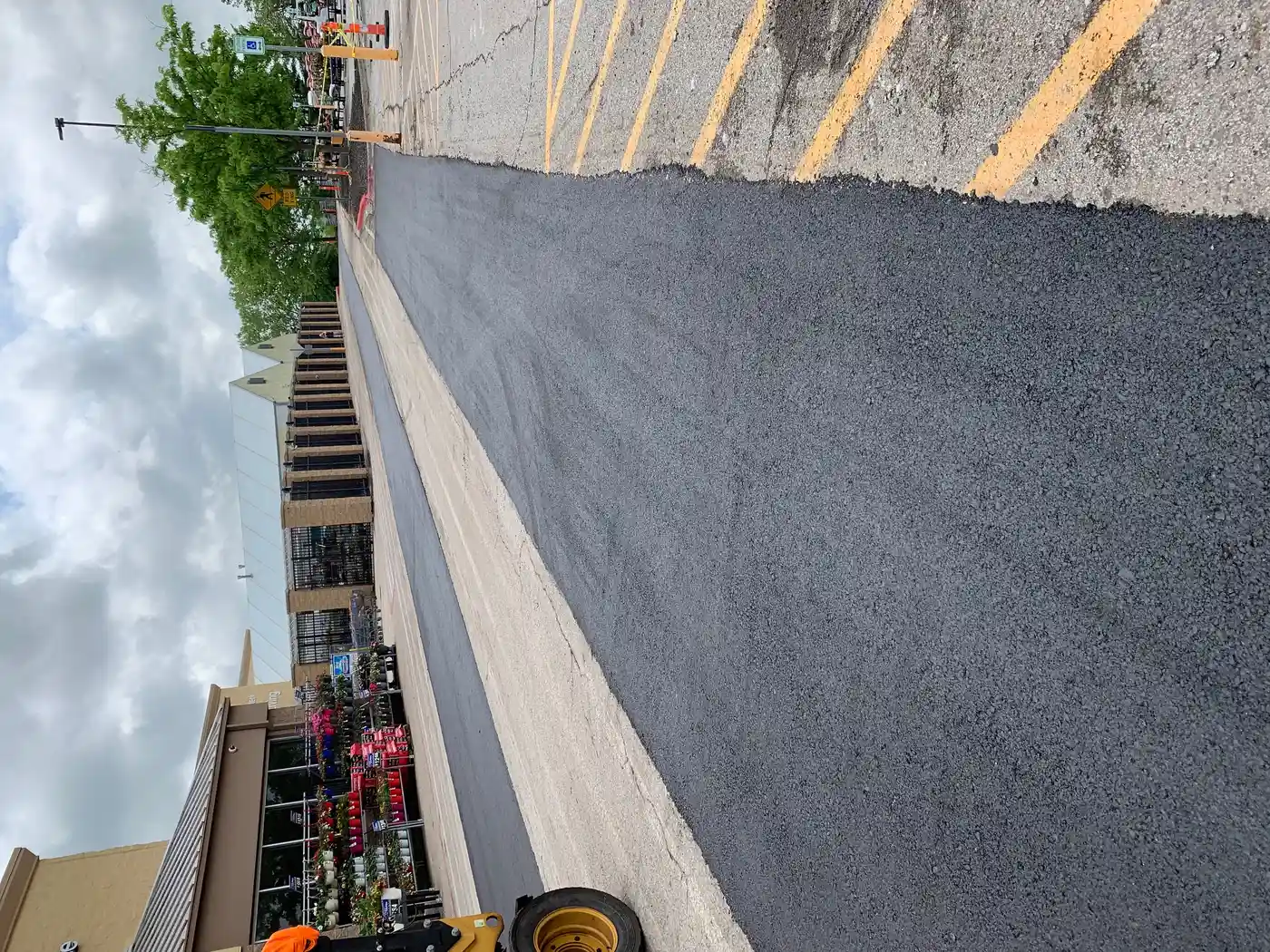
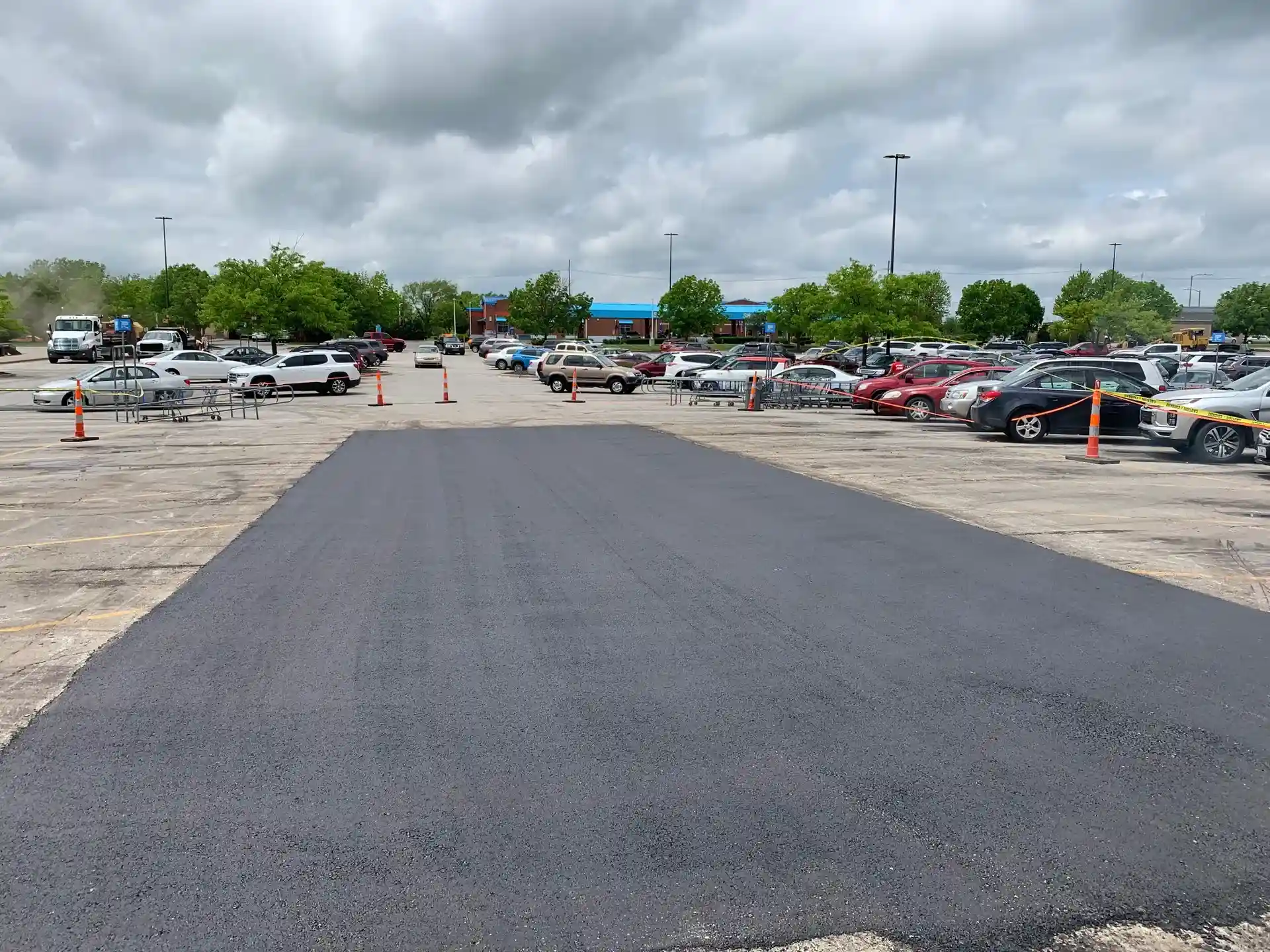
An overlay adds new asphalt on top of your existing pavement, while reconstruction removes everything down to the subgrade and starts fresh. The key difference is the condition of your base layer. If your parking lot has extensive alligator cracking, deep rutting over 2 inches, or widespread base failures, you need reconstruction. But if the damage is primarily surface-level with intact base structure, an overlay provides the same smooth finish at significantly lower cost. We test pavement density and core samples to determine base integrity before recommending either option. Overlays work perfectly for lots with surface cracking, minor raveling, or oxidation. In Kansas City's heavy clay soils, especially in Jackson County, base failures often show as pumping water through cracks or soft spots that deflect under load. When more than 25% of your lot shows these symptoms, reconstruction becomes more cost-effective than patching and overlaying. Union Pacific's Topeka lot fell on the overlay side of that line: the surface had failed but the base underneath was still sound, so we milled it down and paved a fresh hot-mix overlay in lifts instead of tearing the whole lot out — the full Topeka project shows how the finished surface came out.
Commercial Properties That Benefit Most from Asphalt Overlays
Retail centers with 50,000+ square feet of parking see immediate ROI from overlays, eliminating trip hazards and improving customer experience without lengthy closures. Distribution facilities use overlays to strengthen high-traffic lanes and loading dock approaches where constant truck traffic creates surface rutting. Office complexes typically overlay their lots every 12-15 years as part of preventive maintenance programs, avoiding the disruption of full reconstruction. Medical facilities and schools choose overlays during summer breaks, maintaining ADA compliance while refreshing worn surfaces. Industrial properties often overlay in phases, keeping operations running while systematically upgrading different parking sections. The overlay process is particularly effective for properties with good drainage and stable subgrades, where surface wear is the primary concern rather than structural failure.
Need Asphalt Overlays for Your Property?
Get a free estimate from the crew that has completed 4,000+ projects across the KC metro. No pressure, no obligation.
Overlay Day: Mill, Tack, Pave, Roll, Stripe
What happens after you call your Kansas City paving contractor — from first inspection to final walkthrough.
We inspect your lot, identify every issue, and provide a detailed estimate — no cost, no pressure.
We design the scope of work around your business hours so your operations aren't disrupted.
Old asphalt is milled down, debris cleared, and the base is prepared for a clean bond.
Fresh hot-mix asphalt is laid to spec and rolled to precise compaction with commercial-grade equipment.
Parking spaces, fire lanes, ADA markings, and signage — your lot is fully compliant and looks brand new.
We walk the finished project with you. If anything isn't right, we make it right before we leave.
Signs Your Property Needs Asphalt Overlays
Surface Cracking Network
Interconnected cracks covering 30-50% of lot surface, but no base movement or pumping water.
Oxidized Gray Appearance
Asphalt turned light gray from UV exposure, with loose aggregate but stable base structure underneath.
Minor Rutting Channels
Shallow depressions (under 1.5 inches) in drive lanes from repeated traffic, creating ponding areas.
Raveling Edges
Aggregate coming loose along parking stall lines and lot perimeter, but center areas remain intact.
Factors That Affect Asphalt Overlay
Overlay costs vary based on several technical factors beyond simple square footage. The depth of milling required affects both time and disposal costs - removing 2 inches costs significantly more than removing 1 inch. Accessibility plays a major role, as tight spaces require smaller equipment and hand work around utilities. The number of structures (manholes, catch basins, light poles) that need adjustment impacts labor hours. Longitudinal joint construction between paving passes requires precision and affects production rates. Current asphalt prices fluctuate with crude oil markets and seasonal demand at Kansas City's three major plants. Additional factors include the complexity of maintaining positive drainage, traffic control requirements for phased work, and whether existing concrete curbs need saw-cutting to match new elevations. Properties requiring night or weekend work to avoid business disruption typically see higher costs due to overtime and plant surcharges.
Get a Free Estimate — (913) 701-6044Recent Asphalt Overlays Projects
Asphalt Overlays — Frequently Asked Questions
Can you overlay my parking lot if it has some isolated bad spots?
Yes, we regularly perform isolated repairs before overlaying. Our process includes full-depth patching of any failed areas, typically cutting out damaged sections in 8x8 foot minimum squares and replacing the base material. These repairs must cure for at least 24 hours before overlay application. We've completed over 4,000 projects combining spot repairs with overlays. The key is addressing all base failures first - otherwise they'll reflect through your new surface within 12-18 months. Our crews use infrared thermometers to ensure patch temperatures match the surrounding pavement for proper bonding.
How thick should my overlay be for heavy truck traffic?
Commercial lots with regular semi-truck traffic need 2.5 to 3-inch overlays using a heavy-duty mix design. Standard parking areas typically receive 1.5 to 2-inch overlays. The thickness depends on your current pavement condition and expected loading. We specify different mix designs for different areas - using coarser aggregate and higher asphalt content in truck lanes. Our milling depth also varies by location, removing more material in rutted areas to maintain consistent final elevation. Kansas City's freeze-thaw cycles demand proper thickness to prevent premature cracking under heavy loads.
What happens to my catch basins and manholes during an overlay?
All drainage structures and utility access points get adjusted to match your new pavement elevation. Before paving, we install steel adjustment rings on manholes and rebuild catch basin throats with new concrete collars. This prevents the common problem of sunken structures that collect water and create hazards. The adjustment process adds roughly one day to smaller projects. For lots with numerous structures, we map each location and coordinate with utility companies if deep adjustments are needed. Proper structure adjustment is critical in Kansas City where 39-42 inches of annual rainfall demands effective drainage.
When is the best time of year to schedule an overlay in Kansas City?
Optimal overlay conditions in Kansas City run from late April through October, when ambient temperatures stay consistently above 50°F. Early spring (March-April) can work but requires careful monitoring of mat temperature and base conditions. We avoid July-August for large projects unless night paving is possible, as 95°F+ temperatures make maintaining proper compaction challenging. Fall months (September-October) offer ideal conditions with moderate temperatures and lower rainfall. Winter overlays are technically impossible due to cold plants shutting down and freezing temperatures preventing proper compaction. Most commercial properties schedule overlays in late summer to prepare for winter conditions.
How soon can we stripe and reopen after the overlay is complete?
Fresh asphalt needs 24-48 hours before striping application, depending on thickness and weather conditions. The HMA must cool to ambient temperature for paint adhesion. We typically pave on day one, then return for striping on day three. In cooler weather (below 70°F), paint can be applied sooner. For phased projects keeping partial areas open, we install temporary striping tape immediately, then apply permanent thermoplastic markings after full cooling. Heavy trucks should wait 72 hours before loading on new asphalt to prevent power steering marks. Most commercial properties can resume normal traffic within 48-72 hours of paving completion.
Trusted Across the KC Metro
Ready to move forward?
One crew installs it, maintains it, and keeps it compliant — no subcontractors. Call (913) 701-6044 or send the form.
KC Metro Cities Where We Provide Asphalt Overlays
Asphalt Overlays — One Call Handles It
One call handles it all — from the first estimate to the final walkthrough. Platinum Paving has completed 4,000+ projects across the KC metro. Every job comes with our 1-year warranty.